
As you weigh the 5 best antifungal nail gel treatments for 2026, you’ll weigh precise applicators, fast relief, and how each one blends action with care. You’ll want to know which formula fits your routine and nails, from brush-on accuracy to repair-serum combos. But there’s more to uncover—how real users rate ease of use, scent, and results, and which option stands up to long-term wear. Keep exploring to find your best match.
Key Points
- VITÉ20 Antifungal Brush-On delivers fast, direct nail bed contact with a brush-on applicator for easy twice-daily use.
- Nail Fungus Gel and Repair Oil Serum combines antifungal gel with nourishing oil in a portable, all-in-one solution.
- Kerasal Nail Fungus Restorative uses a precision-tip applicator with urea and lactic acid to soften and hydrate nails.
- FungaBlend 10 Urea Gel targets the nail bed with 42% urea for quick softening and direct antifungal delivery.
- Treatonic Toenail Fungus Kit provides 25% undecylenic acid, nighttime patches, and daytime liquid for continuous care.
VITÉ20 Antifungal Brush-on, 0.5 Ounce
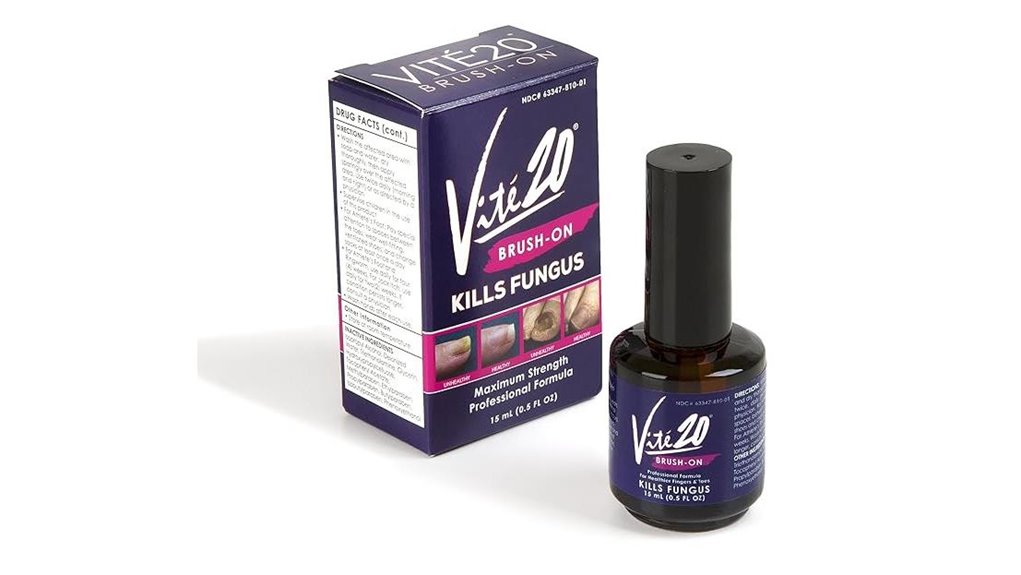
If you’re seeking a fast, easy-to-use option for finger and toe fungus, VITÉ20 Antifungal Brush-On in a 0.5-ounce bottle stands out. You apply it sparingly twice daily after washing and drying the affected area, or as directed by a physician. This treatment targets most finger and toe infections, including athletes’ foot and ringworm, and it kills fungus on contact. Its active ingredient, miconazole nitrate, is FDA-recognized when used as directed. You’ll notice relief from itching, burning, and cracking, with prompt action to stop the infection in its tracks. For clear nails, VITÉ20 has long stood by feet care.
Best For: Those seeking a fast, easy-to-use antifungal treatment for finger and toe infections, including athletes’ foot and ringworm.
Pros:
- Kills fungus on contact for rapid relief
- Easy to apply with a brush-on applicator
- Safe when used as directed and suitable for daily use (twice daily)
Cons:
- Must be used consistently for best results over a period of time
- May cause irritation or sensitization in sensitive individuals
- Not a substitute for medical advice if infections persist or worsen
Nail Fungus Gel and Repair Oil Serum
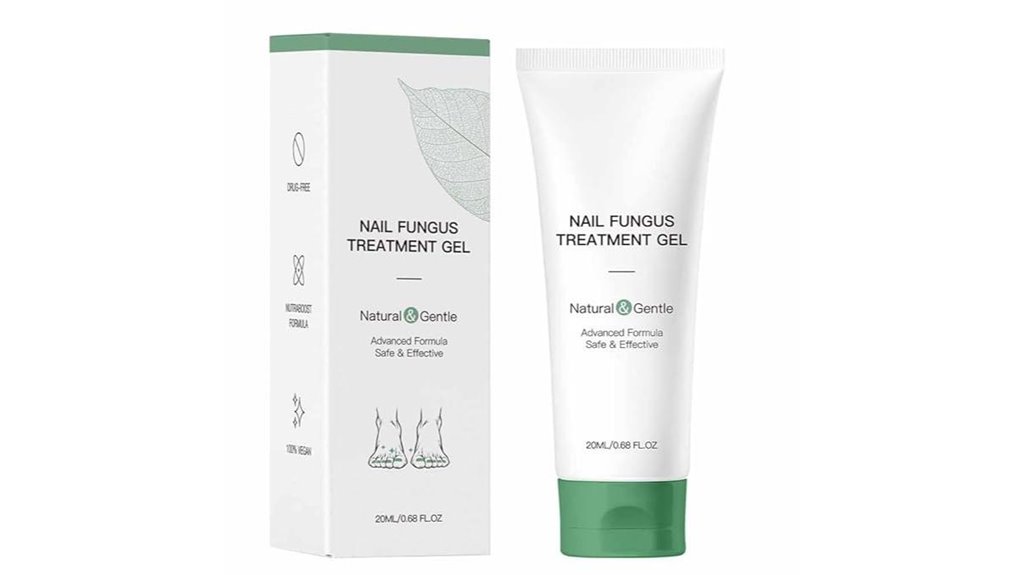
For those seeking a compact, all-in-one solution, the Nail Fungus Gel and Repair Oil Serum stands out with its 20 ml gel formula paired with a repair oil—delivering hydrating care and antifungal action in a single step. This multi-purpose nail treatment combines a gel for targeted fungus control with a nourishing oil to hydrate nails and restore shine. It’s designed for easy absorption—massage gently to boost uptake and support healthy nail growth from the roots. Made with natural, mild ingredients, it’s safe for regular use and comes in a small, portable package for on-the-go results.
Best For: Those seeking a compact, all-in-one nail care solution that combines antifungal action with hydrating oil for on-the-go use.
Pros:
- Combines antifungal action with nail hydration in a single product
- 20 ml gel per piece is compact and portable for travel
- Easy absorption with massage to boost uptake and support nail growth
Cons:
- May require consistent use over time for best antifungal results
- Gel + oil combo might not suit those who prefer separate treatments
- Specific antifungal efficacy not quantified in the provided details
Kerasal Nail Fungus Restorative Nail Repair 0.33 fl oz
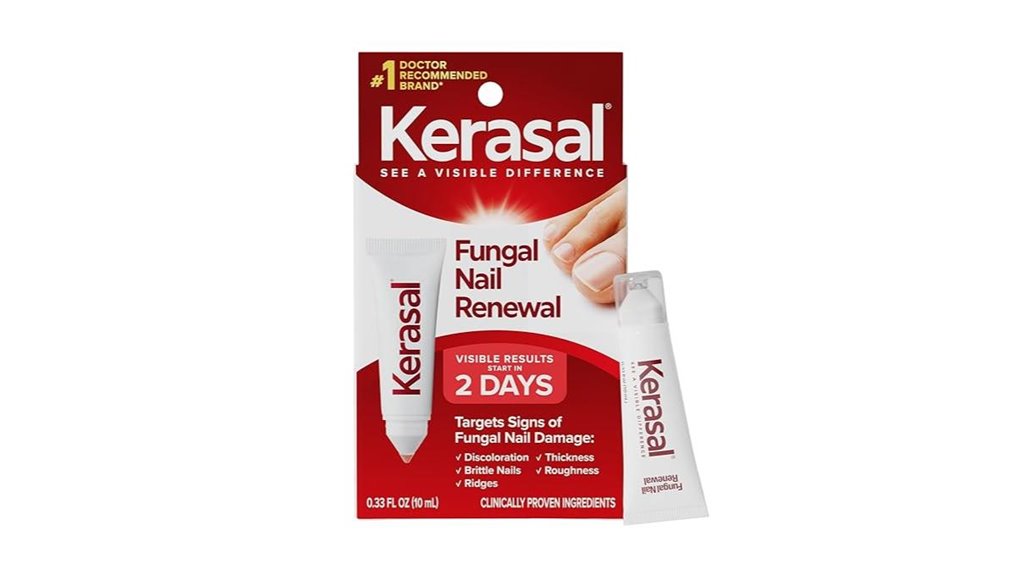
Kerasal Nail Fungus Restorative Nail Repair 0.33 fl oz is built for anyone dealing with thick, discolored nails who wants a targeted, easy-to-use solution. You apply with a precision tip directly to affected nails, making mess-free, daily care simple. The dermatologist-developed formula uses urea and lactic acid to gently exfoliate, hydrate, and smooth, reducing thickness and restoring clarity over time. It targets roughness, ridges, and discoloration, supporting healthier-looking nails with consistent use. Trusted by over 10 million users since 2010, it helps visibly improve nail appearance without harsh dyes or chemicals. Integrate into your routine and apply where needed.
Best For: Thick, discolored nails seeking a targeted, easy-to-use daily treatment with a precision applicator.
Pros:
- Targeted, mess-free application with a precision tip
- Dermatologist-developed formula using urea and lactic acid for gentle exfoliation and hydration
- Helps reduce thickness and restore clarity over time with consistent use
Cons:
- May require several weeks of consistent use to see noticeable improvements
- Not a cure-all for fungal infections; results vary by individual
- May not be suitable for nails with severe damage or certain underlying conditions without medical advice
FungaBlend 10 Urea Gel for Fungus Nail Repair
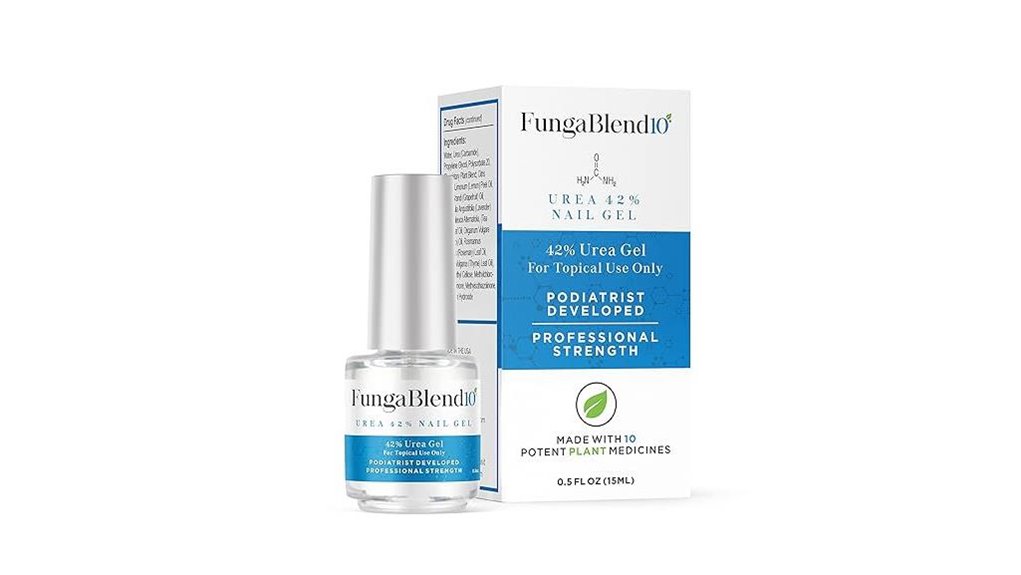
FungaBlend 10 Urea Gel for Fungus Nail Repair stands out for those seeking a fast-acting topical option that delivers medication directly to the nail bed; the 42% urea active softens and thins the nail to create a clear pathway to infection, speeding up the curing process and addressing stubborn nail conditions. You apply the no-mess brush to the top of the nail, with quick-drying, clear results and no odor. This gel targets toe and finger nails, potentially speeding recovery when used alone or with Tolnaftate. It’s backed by a 100% guarantee for nail health improvement.
Best For: Those seeking a fast-acting topical treatment to deliver antifungal medication directly to the nail bed and soften nails to speed up recovery, either as a standalone option or alongside Tolnaftate.
Pros:
- Delivers antifungal medication directly to the infection site in the nail bed
- 42% urea action softens and thins nails to create a clear pathway to infection
- Quick-drying, clear application with no odor and no-mess brush
Cons:
- Requires application to the top of the nail only; may not address surrounding skin
- Efficacy may be enhanced when used with Tolnaftate, implying it may be less effective as a standalone in some cases
- Results can vary depending on infection severity and adherence to treatment routine
Treatonic Toenail Fungus Kit: Extra Strength Nail Repair Solution
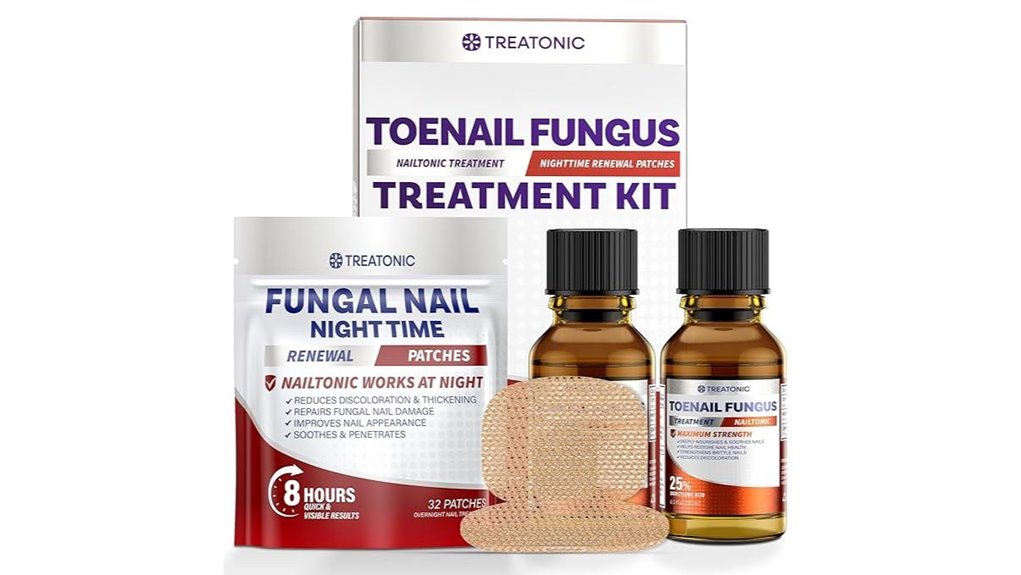
If you’re dealing with stubborn toenail and fingernail fungus and want a complete, on-the-go solution, the Treatonic Toenail Fungus Kit delivers an extra-strength nail repair option with 25% undecylenic acid and 32 nighttime patches for round-the-clock action. This 2-step kit combines a day liquid with 32 patches for around-the-clock treatment, targeting surface and beneath-nail infections. Expect 24/7 results as patches seal in moisture and active ingredients for eight-hour overnight repair. It’s lightweight and easy to use, ideal for athletes, seniors, and active lifestyles. Consistent daily use yields faster, clearer nails and improved texture over weeks.
Best For: athletes, seniors, and anyone needing an on-the-go, 2-step complete toenail and fingernail fungus treatment with around-the-clock action.
Pros:
- Extra-strength formula with 25% undecylenic acid for deeper penetration
- 32 nighttime patches plus daytime liquid for 24/7 treatment
- Lightweight, easy-to-use design suitable for active lifestyles
Cons:
- Overnight patches require wear during sleep, which may be inconvenient for some
- Results may vary and several weeks of consistent use are typically needed
- May not address severe or long-standing infections without medical consultation
Factors to Consider When Choosing Antifungal Nail Gel Treatment
When choosing an antifungal nail gel, consider how the active ingredient’s efficacy matches your infection type and severity. Look at application ease, access, and whether you can reach the affected nail consistently, plus any steps you’ll need for immediate relief. Don’t forget additional care steps and how they fit with your routine to support longer-term results.
Active Ingredient Efficacy
Active ingredient choice largely drives how well an antifungal nail gel works. You’ll see that efficacy hinges on the active you choose, with miconazole nitrate FDA-approved for safe, effective use when directed. Topical gels deliver the agent directly to the nail bed and surrounding tissue, targeting onychomycosis at the infection site. Higher-concentration or specialized actives, such as 25% undecylenic acid or 42% urea-based formulations, claim faster penetration and deeper delivery to the nail bed. Formulations with precision applicators enable targeted, mess-free application to affected nails, improving contact with infected areas. Some products combine antifungals with nail-strengthening or exfoliating components to address thickness, discoloration, and brittleness alongside infection control.
Application And Access
Application and access play essential roles in choosing an antifungal nail gel. You’ll want a format that lets you target the affected nail areas directly, whether brush-on or top-applied, to guide treatment where it’s needed most. Follow guidance that asks you to wash and thoroughly dry the area, then apply sparingly twice daily or as your clinician directs. Look for precision applicator tips or no-mess brushes that help you reach the nail bed and edges without excess product. Packaging should specify direct application to fingernails or toenails, plus notes about avoiding staining or odor and reminding you to wash hands after use. Some regimens pair gels with nighttime patches or repair serums to support adherence and continuous treatment.
Targeted Nail Reach
Targeted nail reach is about how precisely a gel treatment delivers antifungal actives to the infected nail bed and surrounding areas. You’ll want formulations that offer direct nail-to-nail contact, using brush-on or precision-tip applicators to target edges, cuticles, or the plate without irritating nearby skin. Gel-based options may include penetrants or vehicles such as urea or solvents that soften the nail plate, enabling deeper penetration. The effectiveness of targeted reach hinges on how you apply it and on the product design that minimizes residue on adjacent skin. Clear targeting aims to attack the infection at the source within the nail bed while limiting exposure to healthy tissue, supporting focused treatment without unnecessary spread.
Short-Term Relief Pace
Short-term relief is often about how quickly symptoms like itching and burning ease after starting a gel treatment, typically within days to weeks with consistent, twice-daily use. You should expect faster relief from itching, burning, and cracking, but remember that true thickened-nail clearing usually needs weeks to months of steady use. Some formulas tout rapid contact-kill or surface cleansing, yet visible nail improvement often lags behind symptom relief. Consistency matters: interruptions can delay noticeable progress, so follow the label’s recommended duration. Reading the expected timeline helps you set realistic expectations because improvement rates vary with infection severity and your response. If symptoms ease quickly, that doesn’t guarantee rapid nail clarity, and if relief is slow, continuing as directed remains crucial for eventual results.
Additional Care Steps
Beyond sticking to the gel as directed, you can boost results with practical daily care. Start with daily cleansing of the affected nails using soap and water, then dry thoroughly before applying the gel. For best results, apply the gel as directed—typically twice daily or as prescribed—until symptoms improve and new healthy nail growth appears. Use emollients or puncture-resistant moisturizers around the nail edges to reduce cracking and support healing, while avoiding interference with the gel’s application area. If the infection persists beyond several weeks or recurs after improvement, consult a physician to reassess the plan. Pair the gel with a comprehensive routine—nail trimming, avoiding occlusive footwear, and maintaining dry conditions—to reduce reinfection risk and support nail recovery.
Common Questions
How Long Does Each Gel Typically Take to Show Results?
You’ll typically see results in about 2 to 4 weeks, though it depends on nail growth and infection extent. Most gels start fading or improving within 1–2 weeks, with clearer results after a full nail cycle (6–12 months for toenails, 4–6 months for fingernails). Consistency matters: apply as directed, keep nails dry, and avoid picking. If you don’t notice improvement after 4–6 weeks, consult a clinician. Remember, gels don’t fix fast for everyone.
Are These Gels Safe for Pregnant or Nursing Individuals?
Yes, some antifungal nail gels are considered safer during pregnancy or nursing, but you should not assume all are safe. Check your specific product’s labeling for pregnancy and lactation cautions, and talk to your healthcare provider before use. Avoid self-treating if you’re in the first trimester or have liver or other health issues. If you notice irritation, discontinue and consult your clinician. Use only as directed, and monitor for reactions.
Do Gels Require Prescription or Are They OTC Only?
Gels for nails are usually OTC, not requiring a prescription, though some antifungal gels or medicated formulas may need a doctor’s guidance if you have persistent symptoms. Check active ingredients and directions carefully. If you’re unsure, talk to a pharmacist or clinician before using, especially if you’re pregnant, nursing, or have sensitive skin. Use as directed, avoid damaged nails, and monitor for irritation or lack of improvement within a few weeks. Seek medical advice for concerns.
Can Antifungal Gels Treat Skin Surrounding the Nail as Well?
Yes, antifungal gels can treat skin around the nail, but effectiveness depends on the specific product and its labeled use. Look for gels that explicitly cover surrounding skin and display antifungal ingredients proven for dermatophytes. Follow directions closely, apply to both nail and adjacent skin if allowed, and continue treatment for the full course. If you notice irritation, worsening, or no improvement after a set period, consult a clinician. Avoid applying on broken skin unless directed.
Do Gels Stain Nails or Affect Nail Polish Adhesion?
Gels can stain nails or affect polish adhesion, but it depends on the formula. Some antifungal gels are clear and designed to be nail-friendly, while colored gels or thick formulations may leave staining or lift depends on your nail health and how you apply it. To minimize issues, let the gel fully dry, use a clear top coat, and choose products labeled as non-staining. Test on a small area first, and consult a dermatologist if concerned.