
If you’re battling thick, dry nails, you’ll want options that combine keratolysis with moisture, like urea and salicylic acid. In 2026, five top picks aim to soften, exfoliate, and rebalance nails while you manage discoloration and odor. You’ll find patches, creams, and gels designed to work overnight or over a few weeks, but the best choice depends on your nails and routine. Curious which blend fits your needs best?
Key Points
- Opti-Nail Fungal Nail Renewal Patches provide a nightly, patch-based approach for gradual lightening, smoothing, and moisturizing of fungus-damaged nails.
- New York Biology Urea Cream combines 42% urea with 2% salicylic acid plus moisturizers to soften rough, dry skin around nails and feet.
- NONYX Fungal Nail Clarifying Gel offers clinically supported, fragrance-free treatment safe under polish with clear-drying formula.
- Ebanel Callus Remover & Urea Cream Set combines 20% urea plus salicylic acid with 40% urea cream and hydrating actives for keratolysis and barrier restoration.
- Toenail Fungus Treatment Extra Strength uses 25% undecylenic acid with tea tree oil and vitamin E, delivered via a portable Twist-Precision applicator for nails.
Opti-Nail Fungal Nail Renewal Patches (21) Night Treatment
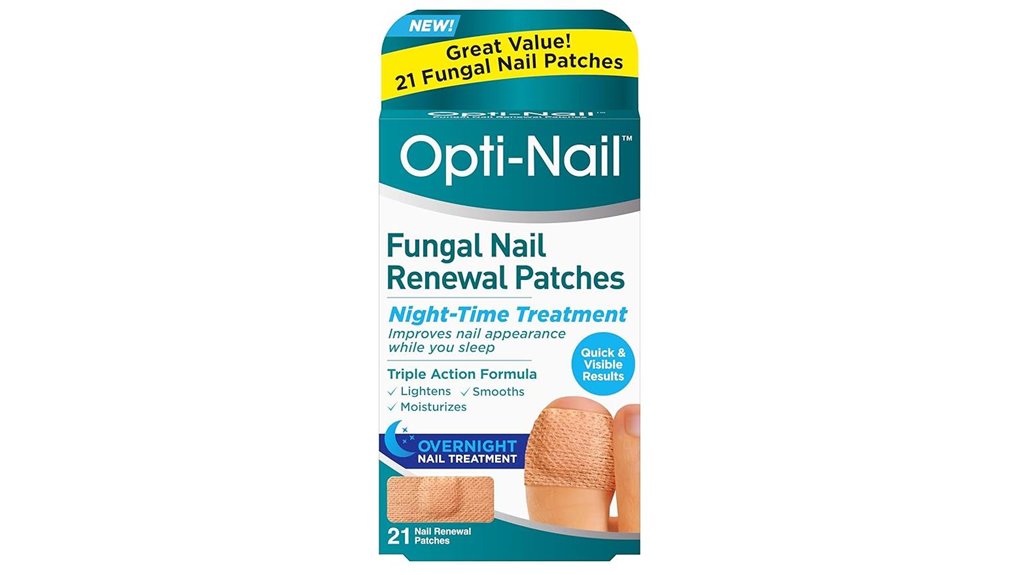
Opti-Nail Fungal Nail Renewal Patches (21) Night Treatment is ideal if you want an overnight, mess-free solution you can apply before bed. You’ll use 21 easy patches for nightly care, aligning with a simple, rule-free routine. The patch delivers triple action—lightening, smoothing, and moisturizing—to help improve the appearance of fungus-damaged nails. Its unique nail-brightening formula targets clearer, healthier-looking nails by supporting a gradual restoration process. Apply one patch per night as needed; it’s designed for convenience and consistent use. This value-packed option provides multiple nights of treatment in a compact, easy-to-use format.
Best For: Individuals seeking an overnight, hassle-free patch-based solution to improve the appearance of fungus-damaged nails.
Pros:
- Simple, mess-free nightly application with 21 patches included
- Triple-action formula targets lightening, smoothing, and moisturizing
- Designed for gradual improvement of clearer, healthier-looking nails
Cons:
- Requires consistent nightly use to see results
- Patch-based treatment may be slower than other intensive options
- May not address underlying fungal infection for all users
New York Biology Urea Cream with Salicylic Acid 4 oz
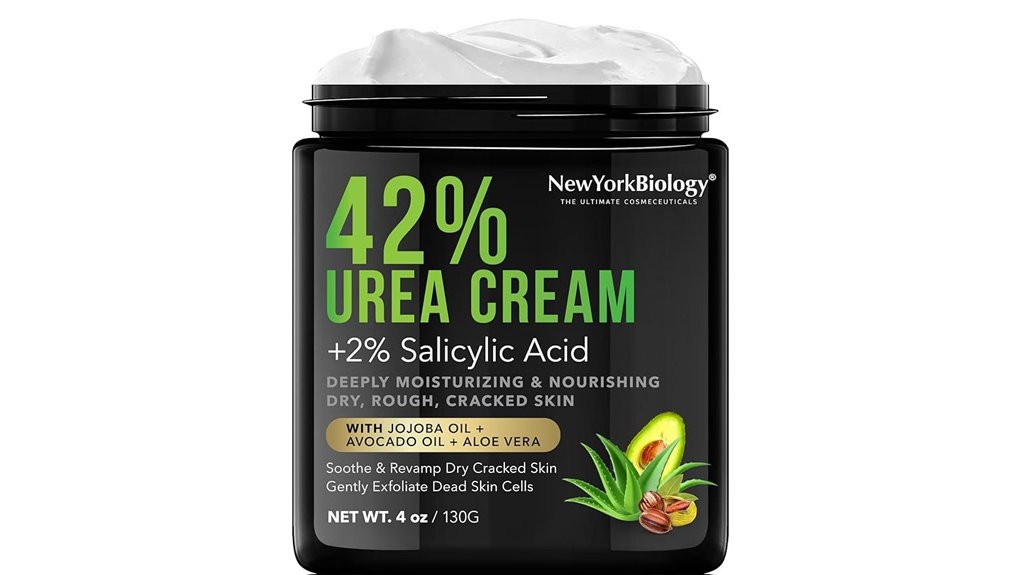
If you’re seeking a fast-acting foot treatment that softens rough skin while smoothing dead skin, New York Biology Urea Cream with Salicylic Acid 4 oz is a standout option in the 2026 lineup. This 4 oz bottle packs 42% urea to soften dry, rough skin and 2% salicylic acid to improve the appearance of dead skin, calluses, and corns. It also includes jojoba oil, avocado oil, and aloe vera for extra moisture. Ideal for feet, it targets cracked heels and dry patches, exfoliating and hydrating in one step. Suitable for both men and women seeking renewed, smoother skin.
Best For: Individuals seeking a fast-acting foot treatment to soften rough skin while smoothing dead skin, especially on cracked heels and calluses.
Pros:
- 42% urea effectively softens dry, rough skin
- 2% salicylic acid helps exfoliate dead skin and improve the appearance of calluses and corns
- Includes moisturizing oils (jojoba, avocado) and aloe vera for added hydration
Cons:
- May cause stinging or tingling if applied to broken skin or sensitive areas
- Strong active ingredients may not be suitable for very sensitive skin or daily use for some individuals
- Fragrance or texture may not be ideal for those seeking a completely fragrance-free product
NONYX Fungal Nail Clarifying Gel – Clinically Proven Toenails
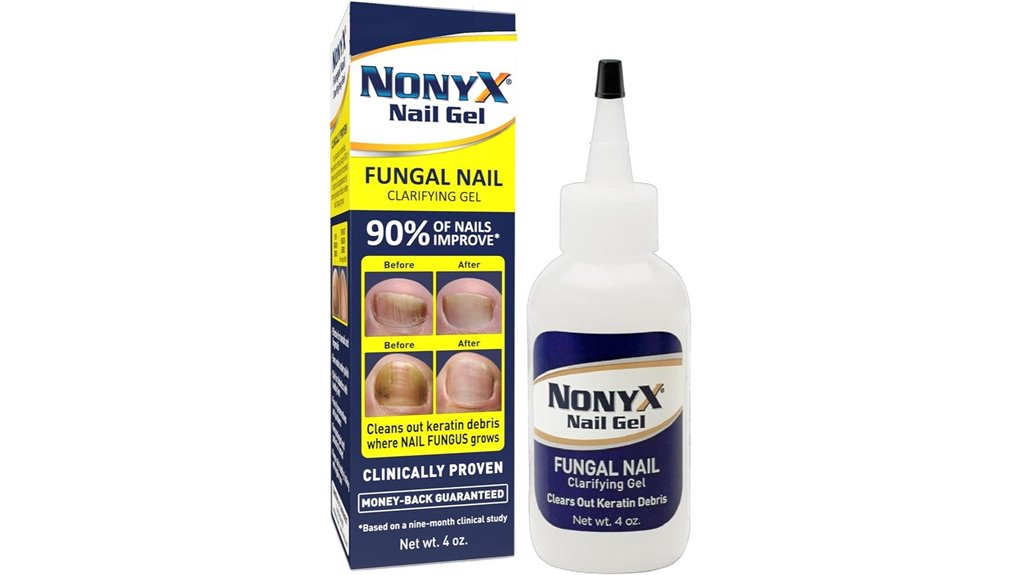
NONYX Fungal Nail Clarifying Gel stands out for you if you want a clinically supported option that’s proven to improve discolored, thick, and brittle nails—whether on toes or fingers. It’s clinically proven for discolored, thick, brittle, yellow, lifted nails and is suitable for both toenails and fingernails. Since 2004, podiatrist and dermatologist recommended, it works under nail polish and can be applied three times per month or when you change polish, especially with acrylic-based polishes. In a double-blind study, 90% of nails improved; vegan, paraben-free, odor-free, and easy to remove. Made in the USA, 4-ounce bottle.
Best For: patients seeking a clinically supported, vegan, and fragrance-free option to improve discolored, thick, and brittle nails on both toes and fingers, especially for those who wear polish and want a product safe for use with acrylic-based polishes.
Pros:
- Clinically proven results (90% improvement in nails in a double-blind, placebo-controlled study)
- Suitable for both toenails and fingernails; works under nail polish
- Vegan, paraben-free, odor-free, dries clear, and easy to remove
Cons:
- Requires regular use (3 times per month or when changing polish) to sustain results
- Contains ethanoic acid, which may be an adjustment for very sensitive individuals
- 4-ounce bottle, while larger than many brands, may still be limiting for long-term, multi-nail use
Ebanel Callus Remover & Urea Cream Set (40%/Salicylic)
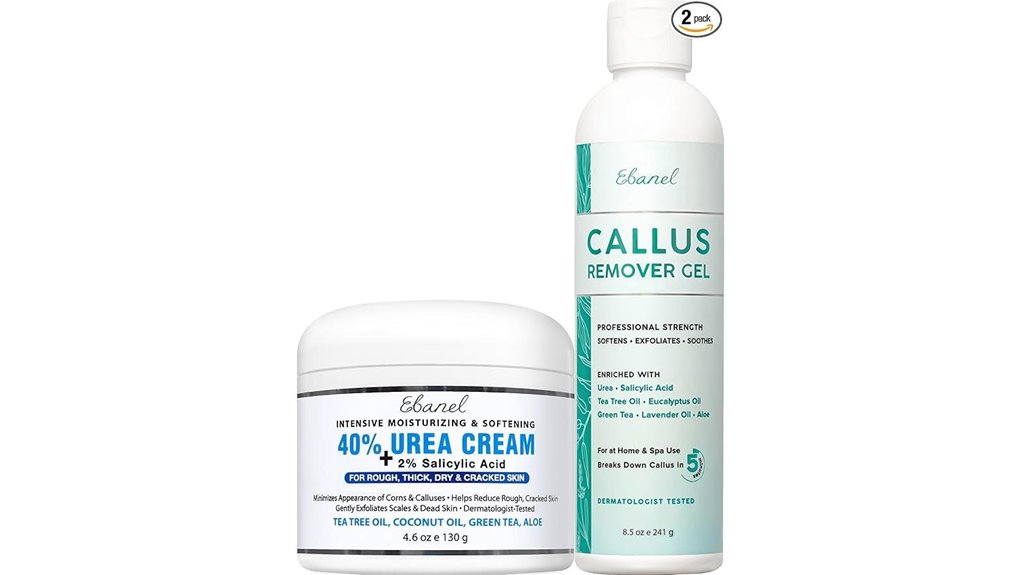
Ebanel’s Callus Remover & Urea Cream Set stands out for anyone needing a potent keratolytic boost at home or in a salon, thanks to its dual-action formula of 20% Urea combined with salicylic acid and a 40% Urea cream. You penetrate deeply to dissolve stubborn calluses and rough patches, promoting smoother, softer feet for pedicures or at-home spa use. The gel exfoliates dead skin, while the heavy- moisturizing Urea cream restores the barrier with shea butter, coconut oil, and hyaluronic acid. Gentle scents mix tea tree, eucalyptus, lavender oils, supporting irritation relief and ongoing texture improvement. Manufactured in the USA, dermatologist-tested and cruelty-free.
Best For: runners, people who stand all day, and anyone seeking a potent at-home or professional pedicure solution for stubborn calluses and dry, rough skin.
Pros:
- Dual-action keratolytic formula with 20% Urea plus Salicylic Acid effectively dissolves tough calluses.
- High-visibility moisturizing cream with 40% Urea plus shea butter, coconut oil, and hyaluronic acid supports skin barrier.
- Dermatologist-tested, made in USA, cruelty-free, vegan-friendly, and hypoallergenic.
Cons:
- Scent combines lavender with a chemical note, which may not suit all users.
- Gel and cream components require careful handling to avoid over-exfoliation.
- May be more intensive than needed for mild dry skin or casual foot care.
Toenail Fungus Treatment Extra Strength (30ml)
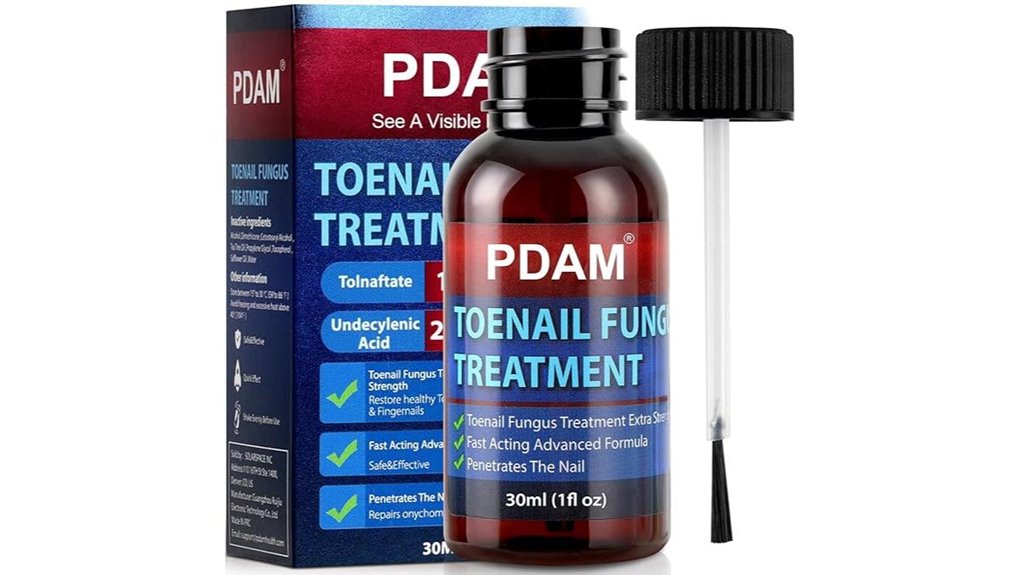
Looking for an extra-strength solution that targets thick, discolored nails and ingrown issues? Toenail Fungus Treatment Extra Strength packs 25% Undecylenic Acid (OTC max strength) to curb most fungal concerns, renew damaged nails, and visibly improve nails. It blends Tea Tree Oil and Vitamin E to moisturize and soothe post-workout tightness, supporting healthy renewal through seasonal changes. The Twist-Precision, press-down applicator makes on-the-go use travel-friendly and discreet. Use 2–3 times daily on clean, dry nails: morning before socks, post-shower, and before bed. Prepare, renew aging nails, address discoloration, and minimize ingrown concerns while you stay active.
Best For: Individuals seeking an extra-strength toenail treatment for thick, discolored nails and ingrown concerns who value an OTC formula with 25% undecylenic acid and convenient travel-ready application.
Pros:
- Contains 25% Undecylenic Acid (OTC max strength) for strong antifungal action
- Tea Tree Oil and Vitamin E provide moisturizing and soothing benefits
- Twist-Precision, press-down applicator is travel-friendly and discreet
Cons:
- Requires 2–3 applications daily, which may be high-frequency for some users
- Results may vary and visible improvements can take time
- May not address all nail issues (e.g., severe ingrown nails) without medical guidance
Factors to Consider When Choosing Fungal Nail Treatment With Urea and Salicylic Acid
When choosing a fungal nail treatment with urea and salicylic acid, consider ingredient strength, how it matches your nail condition, and how easy it is to apply. Look for products that balance effectiveness with moisturizing benefits and choose one that fits your sensitivity and safety needs. Prioritize a straightforward application method and clear usage guidelines to avoid unnecessary complications.
Ingredient Strength Balance
Choosing the right balance between urea and salicylic acid hinges on your skin’s tolerance and the condition of your nails. A higher urea concentration gives stronger keratolytic and moisturizing action for hard, dry nails, but it can irritate if you won’t tolerate it. Salicylic acid at 2% supports exfoliation of thick, dead skin around nails, aiding penetration of other actives like urea. Balancing formulations often pair urea (soothing, moisturizing) with salicylic acid (exfoliating) to address both softness and debris buildup. OTC products commonly combine high urea (25–42%) with lower salicylic acid (around 2%) to optimize efficacy while minimizing irritation. The optimal strength balance depends on skin sensitivity, cracked nails presence, and your tolerance to exfoliation and moisture retention.
Target Nail Condition
Determining the right fungal nail treatment with urea and salicylic acid comes down to your nail condition and tolerance. You’ll want a formula that softens hard, dry skin with urea while exfoliating dead cells via salicylic acid to improve texture. If you’ve got deeper calluses or rough nails, a higher urea concentration (like 40%) targets those areas more aggressively. Salicylic acid supports keratolytic shedding of yellowed or thickened plates, potentially boosting appearance alongside the antifungal goal. Check if the product covers both toenails and fingernails, and note whether it’s compatible with nail polish or acrylics if relevant. Also consider your preferred format—overnight patches, topical gels, or pens—based on how often you want to apply it and your lifestyle.
Application Method Simplicity
Is ease of use the deciding factor for you when selecting a fungal nail treatment with urea and salicylic acid? If you want minimal fuss, patch or patch-like treatments fit best, offering overnight application without daily dipping or brushing for busy schedules. Applicator-type products, like twist-precision or pen applicators, let you target the nail with minimal mess and direct contact. Be aware that creams or gels with urea and salicylic acid usually demand multiple daily applications, which increases complexity and forgetfulness. Nail renewal pens or brush-ons offer portable, travel-friendly options for on-the-go regimens. Ensure clear guidance on how to apply—clean area, dry thoroughly, and follow frequency—to maintain a straightforward routine and effective results.
Moisturizing Benefits
Moisturizing benefits play a key role in choosing a fungal nail treatment with urea and salicylic acid, especially for dry, cracked feet. Urea acts as a powerful humectant and keratolytic, helping you soften and retain moisture in dry, rough skin. Higher urea concentrations, like 40%, provide stronger moisturization and barrier repair for severely dry or cracked areas. The pairing with salicylic acid aids in exfoliating dead skin while boosting moisture penetration for better hydration. Added emollients such as jojoba oil, avocado oil, shea butter, and hyaluronic acid support long-lasting moisture and skin elasticity. Regular use of urea-containing formulations helps sustain softer, smoother skin, reducing friction and improving overall foot comfort. This combination enhances both hydration and barrier resilience.
Safety and Sensitivity
When choosing a fungal nail treatment with urea and salicylic acid, safety and sensitivity should top your checklist: salicylic acid can irritate cracked skin or sensitive individuals, so patch testing first helps prevent a full-on flare. Look for products with clearly labeled active concentrations, such as 2% salicylic acid and high-percentage urea (40% or 42%), to gauge potential skin suspension and exfoliation effects. Consider potential sensitivity and how the formula may affect you, especially if you have cracked skin. Check for dermatologist or podiatrist endorsements and notes about medical guidance or diabetics’ suitability. Verify the formula is free from parabens, sulfates, and artificial fragrances if you’re reactive. Review explicit usage instructions and frequency to avoid overuse and irritation.
Treatment Duration Expectation
Treatment duration with urea- and salicylic-acid formulations varies, typically ranging from several weeks to a few months with regular use to notice clearer, smoother nails. Your results depend on the product, how often you apply it, and your routine. Some formulas require ongoing use after initial improvement to sustain benefits and prevent relapse of fungal symptoms. The application frequency—daily, multiple times per day, or within specific routines—directly affects how long you’ll wait for visible renewal. Clinically supported timelines are common, setting realistic expectations for clearer nails within weeks to months. In longer regimens, you should pair treatment with complementary steps like occlusive coverage, proper moisturizing, and good nail hygiene to maintain effectiveness over time.
Polish Compatibility
If you plan to wear nail polish with urea- and salicylic-acid treatments, focus on formulas that dry clear, are non-staining, and odor-free. Clear, fast-drying options protect polish appearance, so seek products described as non-staining and odor-free. Check whether the treatment allows concurrent polish use or only between applications, since compatibility hinges on that guidance. Be wary of ethanoic acid or keratin-degrading ingredients that can affect polish adhesion and wear time; verify polish compatibility notes for your routine. Look for formulations specifically labeled as safe to use under regular polish or compatible with nail-color wear, so you don’t disrupt your manicure. Prioritize products that clearly state polish compatibility to ensure seamless integration with your ongoing nail-color regimen.
Value and Convenience
Balancing value and convenience means choosing formulations that pair active keratolytics, like salicylic acid, with moisturizing urea to both exfoliate thick nails and soften surrounding skin. Look for products that combine these ingredients to simplify your routine and ensure consistent use. Consider the urea concentration: higher levels (40–42%) deliver stronger desquamation and hydration for severe dryness or calluses around nails. Evaluate packaging and usability for on-the-go application, such as patches, pens, or creams, so you can stay adherent daily. Check for multi-benefit formulations with soothing additives (tea tree oil, vitamin E) to support comfort during treatment. Prefer clear dosing guidance—frequency per day and duration—and ensure compatibility with nail polish or existing nail care regimens to keep your regimen straightforward.
Common Questions
Can Urea With Salicylic Acid Treat Fungal Nail Recurrence?
Yes, urea with salicylic acid can help reduce recurrence by softening and exfoliating thickened nail material, improving topical medication penetration. You should use it as directed with a medicated antifungal prescribed by your clinician. It’s not a stand-alone cure, so keep up ongoing antifungal treatment and follow hygiene steps to prevent reinfection. If symptoms return or don’t improve, consult your dermatologist promptly for adjustments or alternative therapies. Consistency and medical guidance matter most.
Are These Products Safe for Diabetics With Nail Fungus?
Yes, they can be safe for diabetics if you use them as directed, but you should consult your doctor first. Choose products labeled for fungal nails, avoid broken skin, and monitor for irritation, redness, or swelling. Diabetics should prioritize foot care, keep nails dry, and seek professional treatment if you notice worsened infection. Do a patch test and follow package directions closely to minimize risks.
Do Patches Work Faster Than Creams for Fungal Nails?
Patches work faster than creams, you might think, but don’t celebrate prematurely. You actually change outcomes when you follow directions. Patches deliver medicine steadily under the nail, yet results vary by severity, nail growth rate, and adherence. You’ll likely see improvement weeks sooner with a patch, but creams offer flexibility for skin around the nail. Choose based on your doctor’s guidance and your ability to keep consistent, not flashy promises.
Can You Use These Products on Broken or Irritated Nails?
Yes, you shouldn’t use these products on broken or irritated nails. If your nail is damaged, wait until it heals and the surface is smooth before applying topical treatments. Clean and dry the area, then follow product directions carefully. If irritation or stinging occurs, discontinue use and consult a clinician. For persistent symptoms, consider a doctor-recommended antifungal with guidance on safe use around compromised nails. Your health comes first.
What’s the Expected Timeline to Notice Improvement?
Like watching paint dry, your nails start improving slowly. Expect clarity and texture changes in about 4 to 12 weeks of consistent use, depending on nail growth and infection severity. You’ll likely see reduced thickness, less discoloration, and improved skin around the nail first. Stay patient, apply as directed, and avoid picking. If no progress after 12 weeks, consult a clinician, as you might need a stronger treatment or re-evaluation.