
As you search for the 7 best UV light options for toenail fungus in 2026, you’ll weigh dual-wavelength devices that blend blue light with infrared for heat and fungi disruption. You’ll notice features like 7–10 minute sessions, auto-off, and portable, clip-on designs you can use at home. The path isn’t instant and progress takes months, but with the right device and consistent use, you’ll uncover what fits your nail care routine—and there’s more to contemplate beyond the basics.
Key Points
- At-home dual-wavelength devices combine blue (407–470 nm) and infrared (905–910 nm) for drug-free toenail fungus treatment.
- Auto-off and multi-nail designs offer hands-free routines, covering multiple nails in short, 7–10 minute sessions.
- Clip-on, portable plug-in units suit home, office, or travel use with charging indicators and 90-minute initial charging.
- Typical full improvement spans 3–12+ months, with visible changes often only after several months of consistent use.
- Safety-focused, non-invasive LED/laser options heat the nail plate to around 43–51°C and emphasize proper hygiene and adherence.
Nail Fungus Laser Treatment Device for Toenails
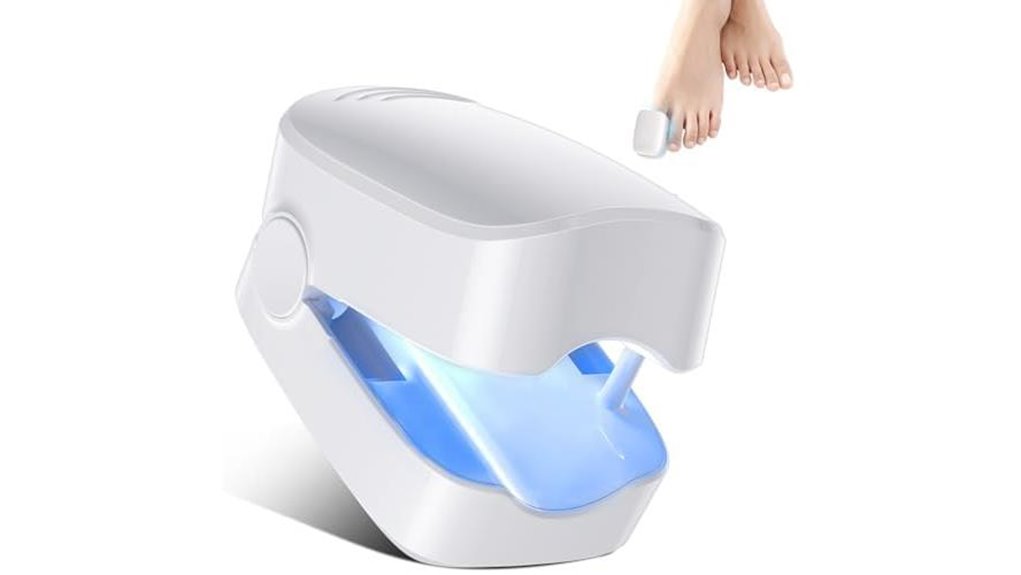
If you’re after a home-use solution that targets the fungus without harming healthy tissue, the Nail Fungus Laser Treatment Device for Toenails stands out for its dual-wavelength approach. This device treats both toenails and fingernails, designed for onychomycosis at home. It’s safe on normal nail tissue and aims to minimize adverse reactions. It uses 470nm blue light and 905nm infrared light, penetrating the damaged nail plate to reach fungus. Use it twice daily for 7 minutes per session. Expect noticeable results in 2–3 months, with full nail replacement taking 6–12 months. Charge for 90 minutes; red during charging, blue when full. Consistent daily use yields best outcomes.
Best For: People seeking a at-home, dual-wavelength nail fungus treatment that targets onychomycosis without harming healthy nail tissue.
Pros:
- Safe on normal nail tissue with a non-harmful approach to surrounding skin.
- Dual-wavelength technology (470nm blue + 905nm infrared) aimed at penetrating damaged nail plate to reach fungus.
- Convenient home-use routine (twice daily, 7 minutes per session) with gradual, long-term improvement.
Cons:
- Noticeable results typically in 2–3 months, with full nail replacement taking 6–12 months.
- Requires consistent daily use and proper charging (90-minute charge; red while charging, blue when full).
- May require professional help for faster results or if relying on quick improvement.
Nail Fungus LED Laser Treatment Device (At-Home)
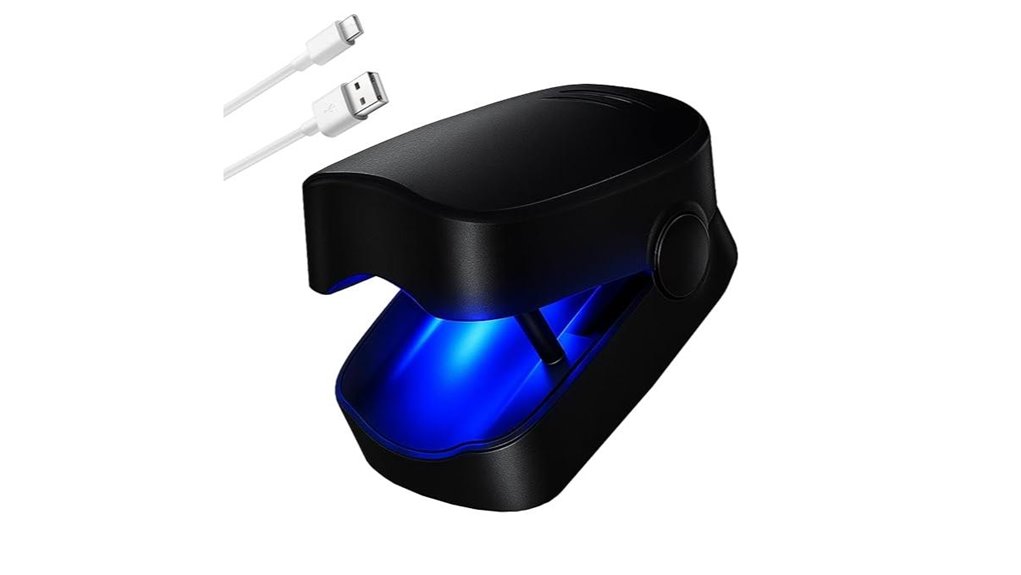
For those who can’t take oral meds or need a gentler option, the Nail Fungus LED Laser Treatment Device (At-Home) uses a precise combination of 910 nm infrared and 407 nm blue light to heat the nail plate and stimulate fungus reduction without drugs. You’ll use it in 7-minute sessions, twice daily, for about 3 months, with toenail growth taking 12–18 months. It’s suitable if you can’t take meds, and eligible for FSA/HSA. Keep nails short and sterilize clippers. Infrared light is invisible and non-damaging; persistence matters—the disease often requires full duration for results. Consistent use yields best outcomes.
Best For: Those who cannot take oral antifungal medications or prefer a non-drug, at-home treatment that uses light therapy.
Pros:
- Non-drug option suitable for patients with liver/kidney concerns or medication sensitivity
- FSA/HSA eligible and can be used at home with a structured 3-month regimen
- Targets nail issues while supporting hygiene practices and gradual nail growth recovery
Cons:
- Requires consistent, long-term use (about 3 months with 12–18 months for full nail growth)
- Results depend on full adherence to the regimen; short-term improvements may not be noticeable
- Infrared light is not visible and effectiveness may vary between individuals
Nail Fungus Laser LED Light Treatment Device
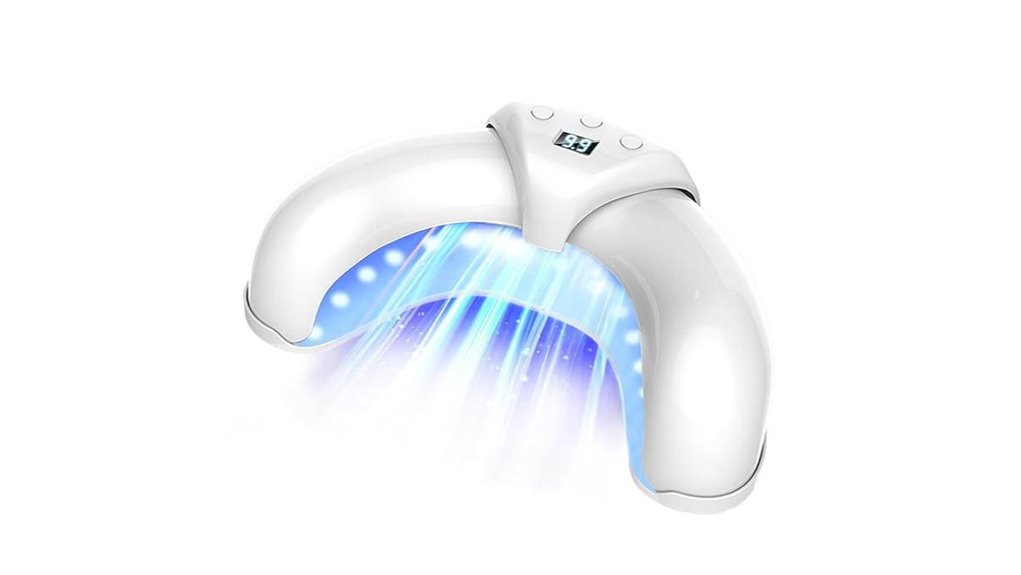
This Nail Fungus Laser LED Light Treatment Device stands out for its dual-wavelength approach, combining 910 nm infrared with 407 nm blue light to heat the nail plate to 43–51°C and deliver a thermal effect that targets fungal infections while supporting nail regrowth. You use this FSA or HSA eligible device for toenail fungus and damaged nails. The treatment runs 7 minutes per session, twice daily, for 3 months; toenails take 12–18 months to grow out, so consistency matters. Keep nails short, sterilize clippers, and maintain hygiene. Infrared light isn’t visible and won’t damage skin, but steady use matters for improvement.
Best For: Toenail fungus sufferers seeking a dual-wavelength (910 nm infrared + 407 nm blue) laser/LED treatment that can be used at home and is eligible for FSA/HSA.
Pros:
- Dual-wavelength approach targets fungal infection while supporting nail regrowth.
- At-home treatment with a defined 7-minute session, twice daily for 3 months.
- Infrared light is not visible and is described as non-damaging when used as directed; helps maintain hygiene with sterilization guidance.
Cons:
- Toenail growth takes 12–18 months, so noticeable results require long-term commitment.
- Short-term improvements may not be obvious; relies on consistent use and adherence to protocol.
- Requires strict nail care routines (sterilizing clippers, keeping nails short) to support effectiveness.
Home Toenail Repair Treatment with Auto Off Modes
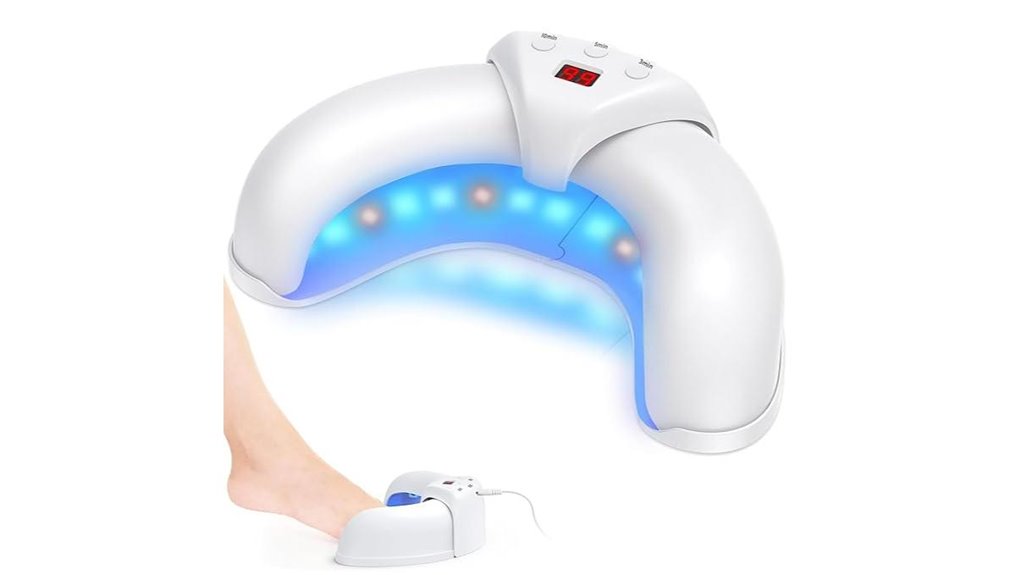
Designed for multitaskers who want effortless routine integration, this Home Toenail Repair Treatment features auto-off modes that power down after 3, 5, or 10 minutes. You apply it to multiple nails and follow a bi-daily 10-minute routine. The device offers three preset durations, with an auto-off function that keeps your daily schedule simple and hands-free. It targets discoloration and thickening while maximizing surface contact across all nails. Expect visible improvements with consistent use; field tests show 83% notice differences within 60–90 days when you stick to the recommended routine. Complete conditioning sessions efficiently.
Best For: Individuals seeking an effortless, hands-free routine to improve discolored or thickened toenails with regular bi-daily use.
Pros:
- Auto-off modes (3, 5, or 10 minutes) support a hands-free, time-managed routine
- High surface contact across all nails to maximize treatment effectiveness
- Clear guidance toward visible improvements with consistent use and 60–90 day potential results
Cons:
- Requires adherence to a bi-daily 10-minute routine for best results
- Field-test based claims may vary between users
- Effectiveness may depend on the degree of nail discoloration or thickening and individual factors
Toenail Fungus Device for Multiple Nails, Home Use White
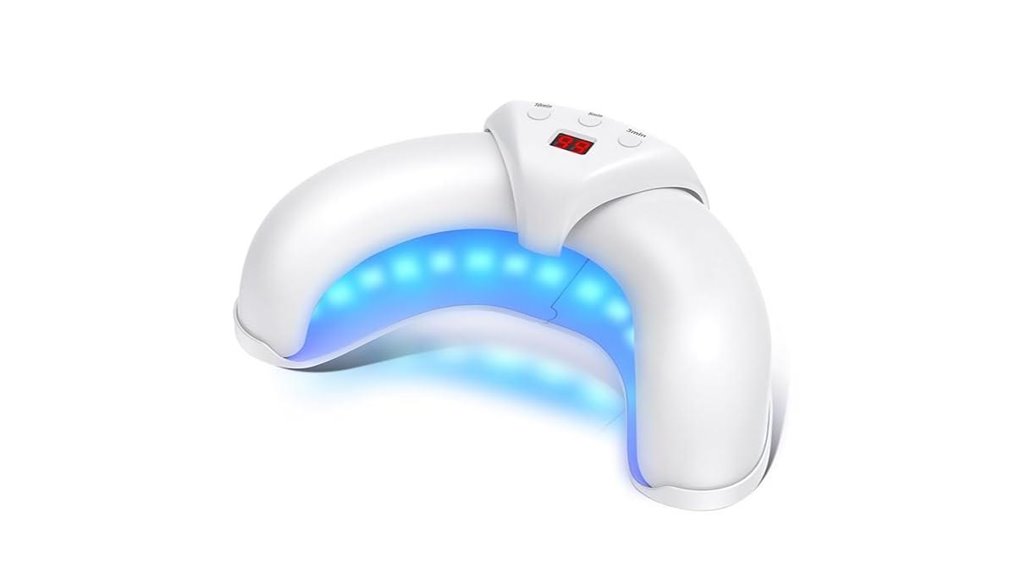
If you want a safe, at-home solution for multiple nails, this Toenail Fungus Device for Multiple Nails is the clear pick, thanks to its 18 LEDs that blend 470nm blue light with 905nm infrared light to treat the entire nail bed without lasers. This non-laser, non-damaging device is designed for home use and fits all fingers and toenails at once. It’s portable, compact, and easy to operate, plugging in to start a 10-minute session with auto-shutoff. Expect improvements in 4–6 weeks, with stronger, healthier nails over 3–4 months as you follow the twice-daily regimen. Safe, reliable, convenient for ongoing care.
Best For: Those seeking a safe, at-home, non-laser solution to treat multiple toenails and fingernails with easy, twice-daily sessions.
Pros:
- Non-laser, non-damaging design suitable for home use.
- Accommodates all nails at once with 18 LEDs (470nm blue + 905nm infrared).
- Compact, portable, and easy to operate with auto-shutoff after each 10-minute session.
Cons:
- Requires plugging in to operate (not cordless).
- Results may take several weeks to months to become noticeable.
- Regular twice-daily use is required to maintain progress.
Nail Fungus Light Device for Home Use
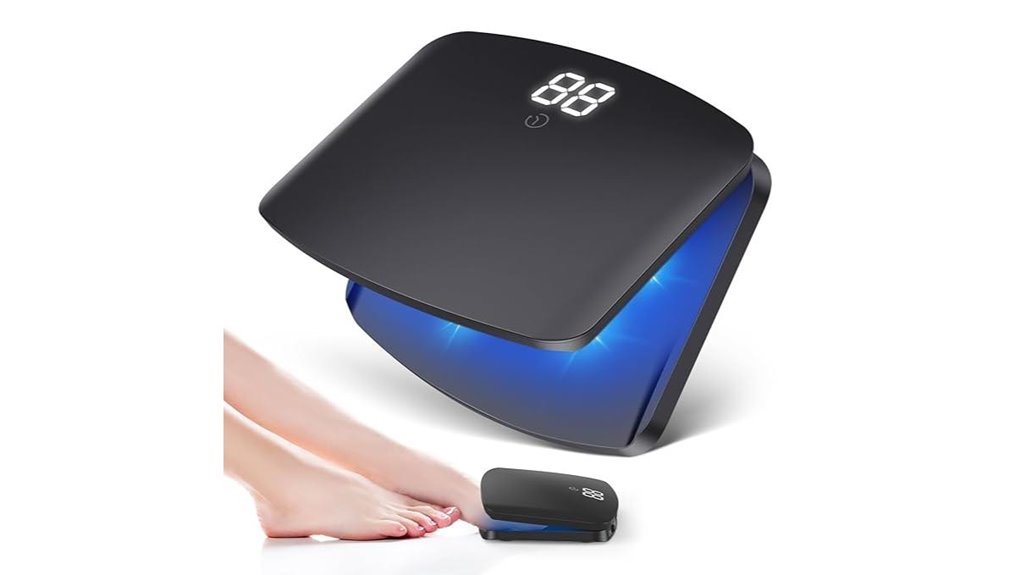
For home users seeking a simple, safe way to tackle nail fungus, this Nail Fungus Light Device stands out with its dual 470 nm blue and 910 nm infrared light approach, designed to penetrate the damaged nail plate without harming growth. This device is a safe, effective option for various nail concerns, aiming to restore normal nails with no reported side effects. It works by delivering blue and infrared light that penetrates the nail bed without altering nail structure. Use 5, 10, 15, or 20-minute sessions, typically 10 minutes twice daily, after washing hands or feet. Turn off after use and store for next time. Continuous use spans months.
Best For: Home users seeking a simple, noninvasive light-based treatment for nail fungus with at-home convenience and no reported side effects.
Pros:
- Noninvasive, drug-free approach using blue and infrared light
- Simple, straightforward operation with multiple time settings
- Helps address various nail issues and supports gradual nail regrowth over weeks to months
Cons:
- Requires long-term, consistent use (months) for visible results
- Results may vary; full nail regrowth can take 6–12 months
- Has to be used twice daily and may require ongoing maintenance
Nail Light for Toenail Fingernails, Home Use Blue
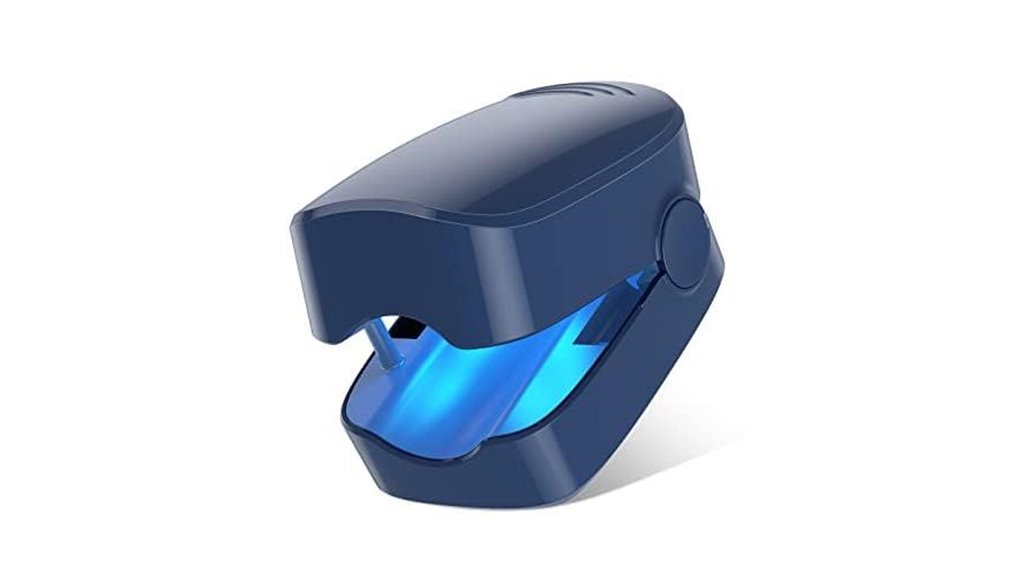
This Nail Light for Toenail Fingernails, Home Use Blue is ideal for beginners who want plug-and-play treatment. Designed for easy use, it’s suitable for inexperienced users, and you simply clip it to your toe or finger to operate. Each session runs 7 minutes, twice daily, with daily use encouraged for progress. It’s portable for home, office, or travel, delivering quick, time-saving sessions. After delivery, charge for 90 minutes; you’ll see a red light during charging and a blue light when full. Easy operation supports both toes and fingers, promoting day-by-day improvement with clear charging indicators.
Best For: Individuals seeking an easy, plug-and-play nail light for quick, twice-daily treatments at home, with portable on-the-go use for nails on fingers and toes.
Pros:
- Simple clip-on design makes it easy for beginners to operate.
- Short 7-minute sessions twice daily fit into busy schedules.
- Portable and suitable for home, office, or travel.
Cons:
- Requires consistent daily use to see progress.
- USB/charging indicators may require monitoring to ensure full charge.
- Not described as suitable for professional or clinical-grade treatments.
Factors to Consider When Choosing UV Light for Toenail Fungus
When picking a UV light, consider the light wavelength range, how long a session lasts, and how often you’ll need to use it. Also weigh safety and any potential side effects, how long toenail growth takes, and whether the device offers convenient features like timers or cordless use. This helps you balance effectiveness with daily life, so you can choose confidently.
Light Wavelength Range
How do you pick the right light wavelength for toenail fungus treatment? You’ll find most devices pair blue light with infrared to target fungus beneath the nail plate. Common options include blue 470 nm with IR 905–910 nm, or blue 407 nm paired with 910 nm, with the two wavelengths influencing penetration and heating differently. Infrared at ≈905–910 nm is near‑infrared, not visible, and mainly contributes thermal effects, while blue light at ≈407–470 nm is visible and provides antimicrobial photochemical action. The total effective spectrum varies by device, and typical treatments elevate nail plate temperatures to about 43–51°C. Wavelength choices affect safety and tissue exposure, so consider how blue light’s photochemical action combines with infrared’s heat when evaluating a device.
Treatment Duration Per Session
Typically, most devices set you to 7–10 minutes per session, twice daily, to balance effectiveness with safety. You’ll likely see auto-shutoff options at 7, 10, or 15–20 minutes, which helps keep each use consistent without guesswork. For real-world results, plan to stick with sessions for several months, given the 12–18 month nail growth cycle. Short-term improvements aren’t usually noticeable; you’ll see meaningful changes only after you complete the full recommended duration and can watch the new nail grow out. To align with treatment timelines, avoid skipping days—persistent daily use matters. If a schedule feels hard to maintain, aim for two daily sessions and maintain routine until the nail fully grows out.
Safety And Side Effects
If you’re weighing UV options for toenail fungus, safety tops the list of factors. Infrared (910–905 nm) and blue (407–470 nm) devices are described as safe for skin and surrounding tissue, with claims they won’t damage nail structure when used as directed. Some descriptions emphasize the light is invisible (infrared) or not harmful, reinforcing a home-use safety perception. Many products specify a consistent, time-limited regimen (for example, 7–10 minutes per session, twice daily) to minimize risks and encourage gradual improvement. Reported timelines for noticeable change span months, reflecting a low-risk approach with long-term use. Safety notes stress hygiene: sterilize tools, keep nails short, and prevent infection, which is crucial alongside light exposure.
Nail Growth Timeline
Nail growth is slow, so you’ll need to plan around a long timeline when using UV light for toenail fungus. Toenails take about 12–18 months to fully grow out, so treatment effects must be sustained for the entire cycle to see a complete nail replacement. You may notice improvements after several weeks to months, but significant changes often require ongoing use across multiple growth cycles. A shorter-term improvement doesn’t guarantee a final cure, since the visible nail can improve while underlying fungus persists in new growth. Adherence matters: stick to the recommended daily session duration (7–10 minutes) and frequency, because the lengthy growth timeline makes consistency crucial. Growth initiation starts around 3 months, with full restoration taking 6–12 additional months.
Usage Convenience Features
When you’re choosing UV light for toenail fungus, convenient usage features can make or break your results. Look for devices with short, fixed session times—7 to 10 minutes—and multiple daily sessions, often twice daily, to fit into your routine. Prefer models with auto-off or shutoff to simplify daily use and prevent overexposure. Check charging indicators and the initial charging duration, typically around 90 minutes, so you’re never left guessing power status. Choose lightweight, clip-on, and portable designs for use at home, in the office, or while traveling. Ensure clear, consistent usage guidelines, such as 2× daily for 3 months or 4–6 weeks for initial improvements, to manage expectations and stay on track.
Common Questions
Are UV Lights Safe for Pets and Children Near Treatment Areas?
Yes, UV lights can be unsafe for pets and kids if you’re not careful. Read the device’s instructions, keep it out of reach, and use it in a closed, controlled area. Limit exposure time, cover skin, and supervise everyone nearby. Turn off the light when not actively treating, unplug when finished, and store safely. Prioritize safety, prioritize space, and prioritize supervision. If unsure, consult a clinician before use near children or animals.
How Long Does a Typical At-Home Session Last?
A typical at-home UV light session lasts about 10 to 15 minutes. You’ll usually apply the device to each affected toe for a set amount of time, following your product’s instructions. Don’t rush; keep the light steady and avoid skin contact with the nails outside the treatment area. You may repeat sessions daily or several times per week as directed, then reassess progress after a few weeks. If you notice irritation, pause and consult a professional.
Do UV Devices Require Medical Supervision or Prescription?
No, you typically don’t need medical supervision or a prescription for at-home UV devices. That said, follow product instructions, limit sessions, and avoid overuse to prevent skin irritation. If you have diabetes, poor circulation, or nail infections with swelling, consult a clinician first. Anachronism: imagine a time traveler asking you to trust a gadget—but your safety matters most. If symptoms worsen, seek professional advice promptly.
Can UV Light Cure Toenail Fungus Permanently?
No, UV light can’t cure toenail fungus permanently. It may reduce visible symptoms and help with shallow infections, but it doesn’t eradicate the fungus in your nails or prevent recurrence. You’ll likely need a doctor-approved treatment plan, possibly including antifungal meds or nails procedures, plus good foot hygiene. If you use at-home devices, follow safety guidelines to avoid skin damage. Seek medical advice for a lasting solution and monitoring.
Are Certain Nail Colors or Polishes Compatible With UV Therapy?
Certain colors can clash with UV therapy—colorless or pale polishes are better, as opaque shades may heat up or trap UV light. You should apply UV-safe coats sparingly and let treatments reach nails beneath. You’ll want to remove polish before sessions to maximize exposure and minimize interference. Prefer clear or light-colored lacquers, and avoid gel or dark polishes during therapy periods. Always follow your clinician’s guidance for safe, effective results.