
If you’re exploring 2026’s top nail fungus laser devices for home use, you’ll find options that combine blue and infrared light, offer cordless operation, and promise visible improvement in a few months. These devices emphasize hygiene, ease, and gradual, safe results while fitting FSA/HSA plans for many buyers. Curious about which models pair efficiency with safety and fit your routine? Let’s consider how each option aligns with your needs and budget.
Key Points
- Dual- and triple-mode home devices combine blue (470–407 nm) and infrared (905–910 nm) wavelengths to target fungus while protecting surrounding tissue.
- Most units offer 7-minute sessions twice daily for 3 months, with auto-shutoff and reminders to support adherence.
- Many models are FSA/HSA eligible or designed for non-invasive use, appealing to those avoiding oral antifungals.
- Battery-powered, cordless designs typically require a 90-minute initial charge with visible charging indicators.
- Expected visible improvements occur in 2–3 months, with full nail regrowth spanning 6–18 months per nail.
Nail Fungus Laser Treatment Device for Toenails
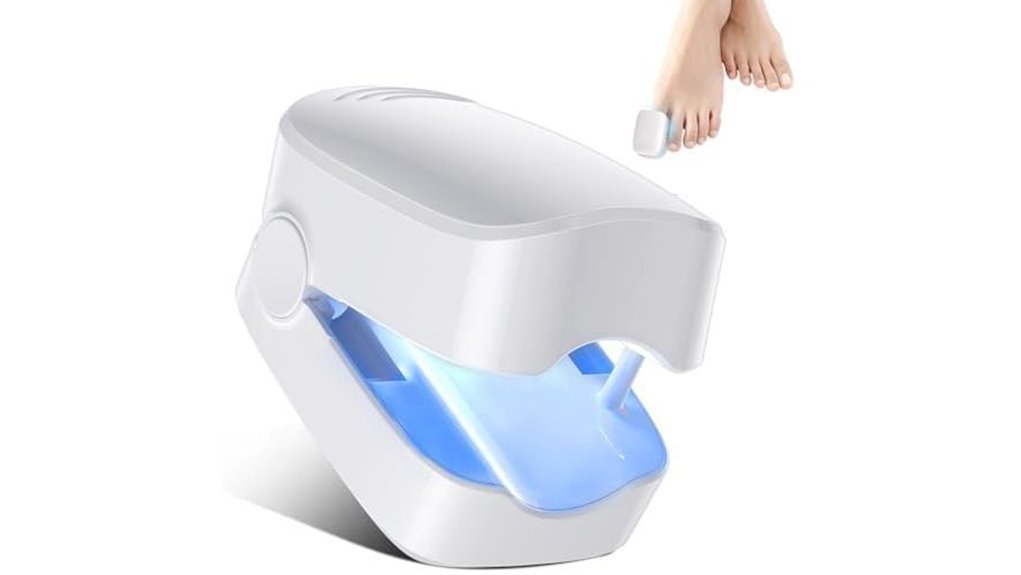
If you’re shopping for a home-use solution to onychomycosis, the Nail Fungus Laser Treatment Device for Toenails stands out for its dual-wavelength approach: 470 nm blue light paired with 905 nm infrared light. You apply it to damaged nails, as the light penetrates the nail plate to target the fungus while remaining safe for surrounding tissue. Use it twice daily, seven minutes per session, with consistent daily use for best results. Noticeable improvements typically show in 2–3 months, though full nail replacement can take 6–12 months. Initial charging takes 90 minutes, and indicators show charging status to keep you informed.
Best For: Individuals seeking a home-use, dual-wavelength laser solution for onychomycosis who prefer a guided, gradual improvement approach with minimal risk to surrounding healthy tissue.
Pros:
- Dual-wavelength technology (470 nm blue + 905 nm infrared) targets fungus while protecting surrounding tissue
- Easy-to-use, beginner-friendly design with 7-minute sessions twice daily
- Long-term improvement focus with visible results in 2–3 months and full nail growth over 6–12 months
Cons:
- Requires consistent daily use for best results, with several months before noticeable changes
- Full nail replacement can take up to a year, which may require patience and commitment
- Home devices may not deliver the same rapid results as professional treatments; professional options may be preferred for quicker outcomes
Nail Fungus Light Device for Toenails White-5
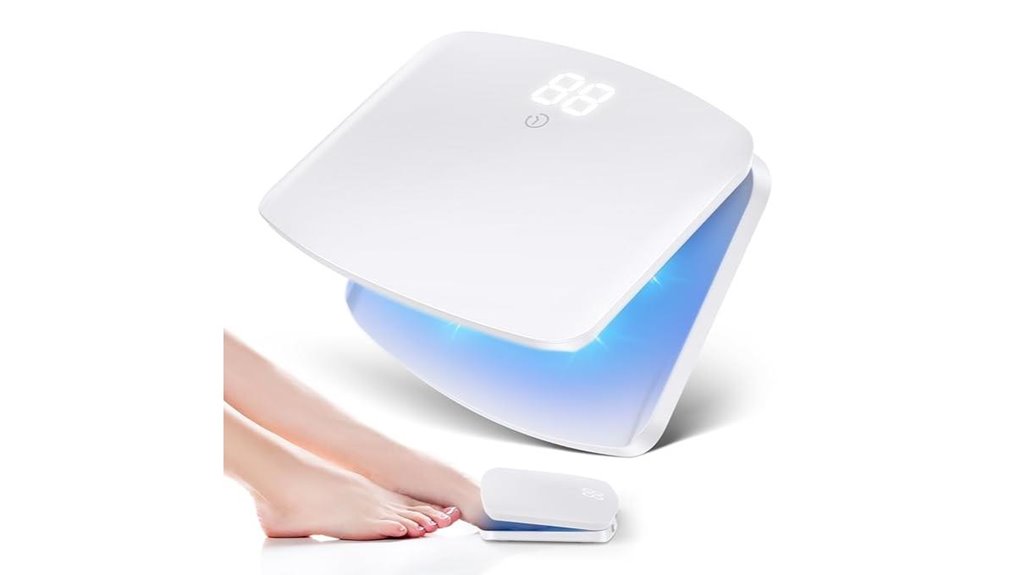
Looking for an at-home solution that combines blue and infrared light for fungal treatment? The Nail Fungus Light Device for Toenails White-5 targets fungus and other nail concerns safely at home. It uses 470 nm blue visible light and 910 nm infrared light, penetrating the damaged nail plate and nail bed without harming growth. For best results, use 10 minutes twice daily, choosing 5, 10, 15, or 20 minutes as needed. Begin with clean hands or feet. Expect measurable changes after 2–3 months, with full regrowth taking 6–12 months. Keep using it consistently and store properly.
Best For: Individuals seeking a home-based blue and infrared light therapy option to address nail fungus and related nail concerns, with a slow-but-steady regrowth timeline.
Pros:
- Non-invasive at-home treatment using visible blue and infrared light.
- Clear usage guidance with multiple time settings (5–20 minutes) and recommended twice-daily routine.
- Designed to penetrate damaged nail plate without harming nail growth, aiming to restore healthy nails over time.
Cons:
- Requires long-term commitment (2–3 months to see changes, 6–12 months for full regrowth).
- Effectiveness can vary; no reported side effects does not guarantee universal results.
- Needs consistent use and proper storage/maintenance to sustain results.
Home Toenail Repair: 3 Modes, Rechargeable, Fast-Acting
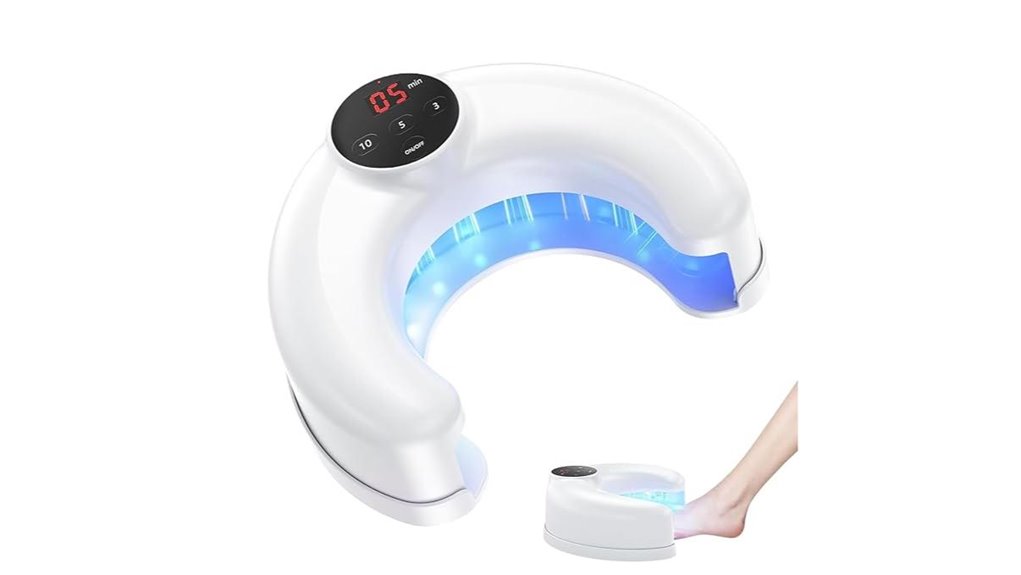
This Home Toenail Repair device stands out for its triple-mode design—3, 5, or 10-minute sessions—paired with a rechargeable battery for cordless use, making it ideal if you want fast, on-the-go treatment that fits a busy schedule. You target multiple nails at once, easing discoloration or thickening across fingernails and toenails. Modes offer 3, 5, or 10 minutes, with auto-shutoff for effortless daily routine. Bi-daily use, 10-minute sessions, yields higher efficacy. Field tests show 83% noticed differences in 60–90 days. The device provides 95% surface contact during full-conditioning, ensuring fast-acting, cordless, multi-nail coverage for quick relief.
Best For: Individuals seeking fast, cordless, multi-nail treatment to relieve toenail discoloration or thickening across fingernails and toenails.
Pros:
- Rechargeable, cordless operation for convenient, on-the-go use
- Three preset durations (3, 5, 10 minutes) with auto-shutoff for easy daily routine
- Simultaneous multi-nail coverage delivers faster, broader conditioning
Cons:
- Field efficacy based on 60–90 day user subset (83% observed differences) may vary by user
- Requires bi-daily 10-minute sessions for optimal results
- Not a standalone price or performance guarantee; results may vary with adherence and nail condition
Nail Fungus LED Laser Treatment Device (At-Home)
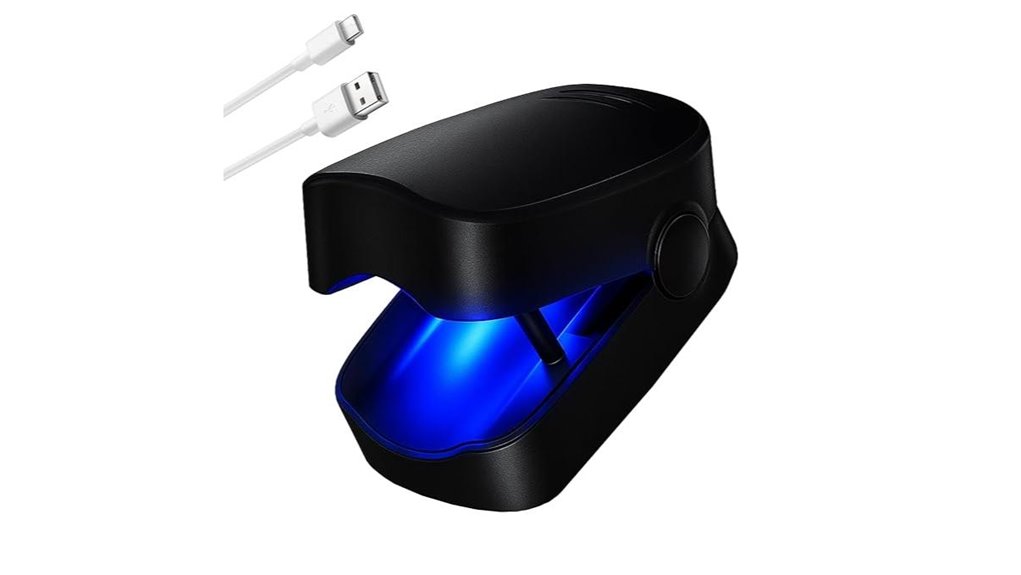
For those who need a home solution that combines infrared and blue light therapy, this Nail Fungus LED Laser Treatment Device stands out for people who cannot take oral medications and want an at‑home option with clear usage guidelines—7 minutes per session, twice daily, for 3 months.
You target the nail with 910nm infrared and 407nm blue light, raising the nail plate temperature to 43–51°C for a thermal effect. Use is persistent: toenails grow in 12–18 months, so visible results may take time. It’s suitable if you can’t take pills and is FSA/HSA eligible. Keep nails short, sterilize clippers, and follow the full regimen to avoid interruptions and maximize nail health restoration.
Best For: Individuals who cannot take oral antifungal medications (elderly, children, liver/kidney issues, or pain-sensitive patients) seeking an at‑home infrared and blue light treatment with a long, persistent regimen.
Pros:
- Non-ingestion therapy suitable for those who cannot take pills
- Clear usage guidelines (7 minutes per session, twice daily, 3 months)
- FSA/HSA eligible and aimed at restoring nail health and reducing symptoms
Cons:
- Results require sustained use over many months ( toenail growth 12–18 months )
- Requires strict adherence; interruptions may diminish effectiveness
- At-home device may require ongoing commitment and consistent hygiene practices
Nail Fungus Treatment Device for Toenails & Nails
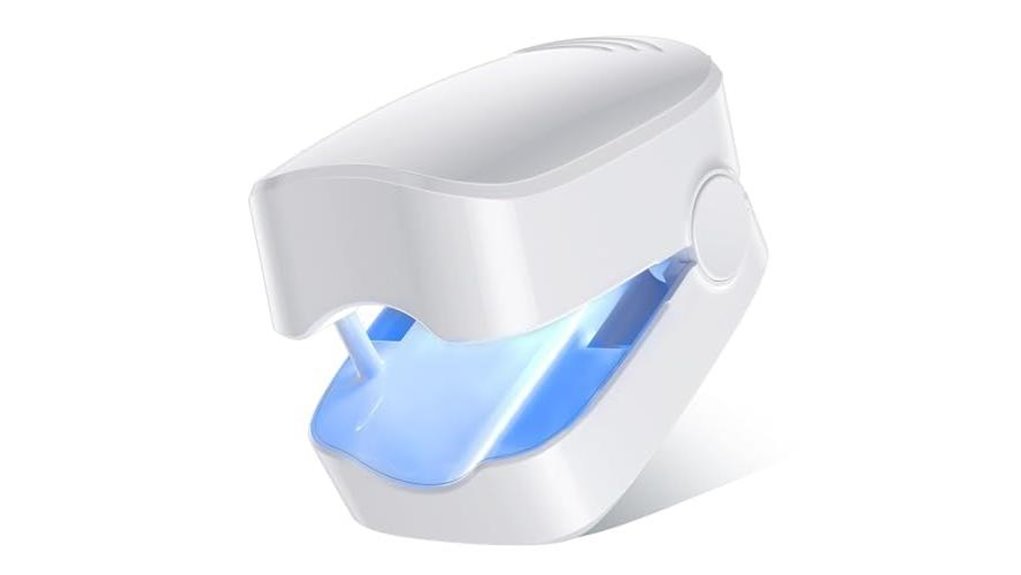
If you want a safe, home-use option that treats both toenail and fingernail fungus without lasers or tissue damage, this Nail Fungus Treatment Device stands out. It uses 470nm blue light and 905nm infrared light to penetrate the damaged nail plate, delivering a non-laser, non-damaging approach. Safe for normal nail tissue, it shows no adverse reactions versus traditional methods. Use it twice daily for 7 minutes per session; visible results appear in 2–3 months, with full nail renewal in 6–12 months. Easy to operate—clip on, 7 minutes each session. It charges in 90 minutes, red while charging, blue when full.
Best For: Individuals seeking a safe, home-based, non-laser treatment option for both toenail and fingernail fungus with visible results in a few months.
Pros:
- Non-laser, non-damaging to tissue, safe for normal nail tissue
- Simple, clip-on design with a straightforward 7-minute per session regimen twice daily
- Clear charging indicators and a defined 90-minute charging time
Cons:
- Full nail renewal may take 6–12 months, requiring long-term commitment
- Requires daily use for best persistence; may be inconvenient for some
- Results can vary and may not be immediate for all users
Toenail Fungus Device for Multiple Nails, Home Use White
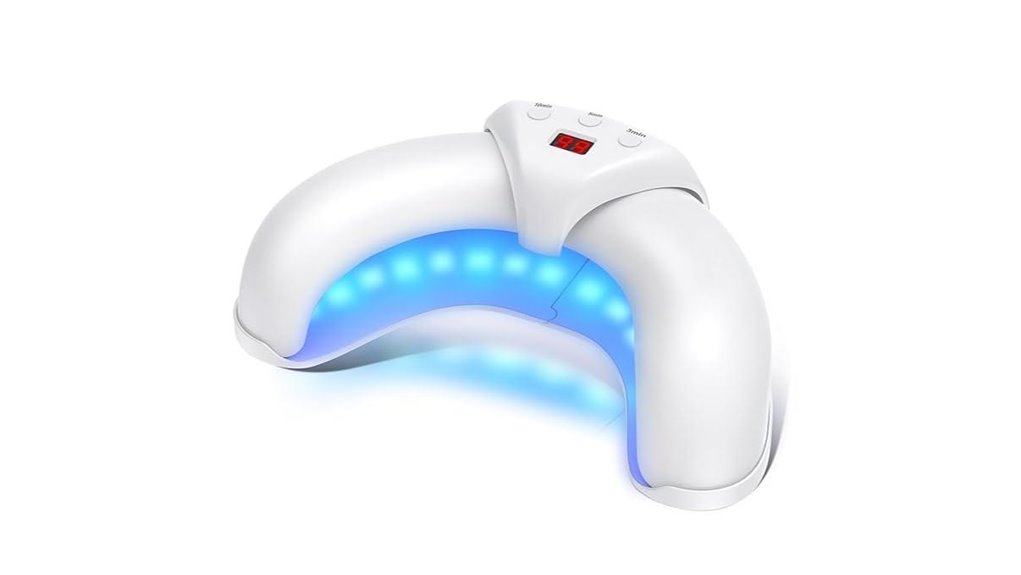
Looking for a home-use device that handles multiple nails at once? This Toenail Fungus Device targets several nails, both toes and fingers, with a white design for home use. It uses 470nm blue light and 905nm infrared light to penetrate damaged nail plates, addressing fungus and discoloration without lasers or damage. The larger unit fits all nails, featuring 18 LEDs for thorough treatment. Expect long-lasting improvements by targeting fungus at its core, with noticeable results in 4–6 weeks and nail repair in 3–4 months. It must stay plugged in, uses a charging cable, and operates 10 minutes per session, twice daily.
Best For: Individuals seeking a non-laser, home-use toenail and fingernail fungus device that treats multiple nails simultaneously with blue and infrared light.
Pros:
- Larger, multi-nail design that fits all fingers and toes at once for convenient treatments.
- Non-laser, safe for at-home use with 470nm blue light and 905nm infrared light.
- Clear treatment plan with defined session length (10 minutes) and twice-daily use.
Cons:
- Must remain plugged in during operation, limiting portability while in use.
- Time to visible results may vary; 4–6 weeks for noticeable improvements and 3–4 months for nail repair.
- Requires consistent use to achieve best results and may not suit those seeking rapid, single-nail solutions.
Nail Fungus Laser LED Light Treatment Device
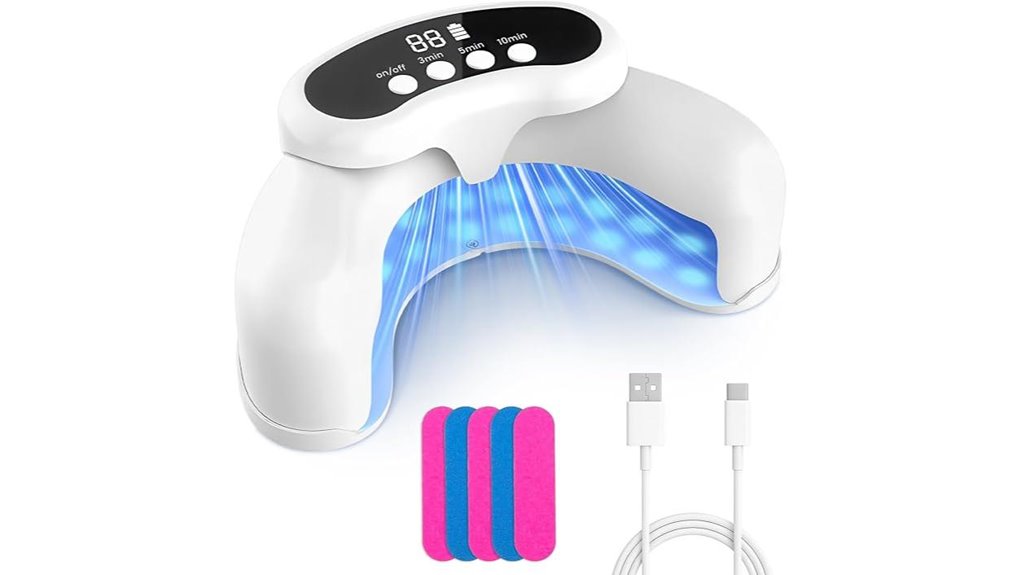
This Nail Fungus Laser LED Light Treatment Device stands out for its dual-wavelength approach, delivering 910 nm infrared and 407 nm blue light to raise nail bed temperature and maximize antifungal effects. You treat each toe with 7 minutes per session, twice daily, for 3 months. Expect gradual improvement as the nail growth cycle spans 12–18 months, with consistent use needed for meaningful results. This device suits people who can’t take oral meds, including the elderly or those with organ concerns. Remember to sterilize clippers, keep nails short, and avoid visible laser exposure, as infrared light isn’t seen.
Best For: People who cannot take oral antifungal medications (e.g., elderly, those with liver/kidney concerns, or medication sensitivities) seeking a non-pharmacological option for toenail fungus.
Pros:
- Dual-wavelength technology (910 nm infrared and 407 nm blue light) designed to enhance antifungal effects.
- Non-invasive, at-home treatment with a defined 7 minutes per session, twice daily.
- Suitable for users who cannot take oral meds and for whom regular monitoring is important.
Cons:
- Requires long-term commitment (up to 3 months of treatment and 12–18 months for full nail growth).
- Results may be gradual and not immediately visible; consistent use is essential.
- Requires meticulous hygiene (sterilizing tools) and careful handling to avoid visible laser exposure.
Toenail Fungus Device for Home Use, Blue
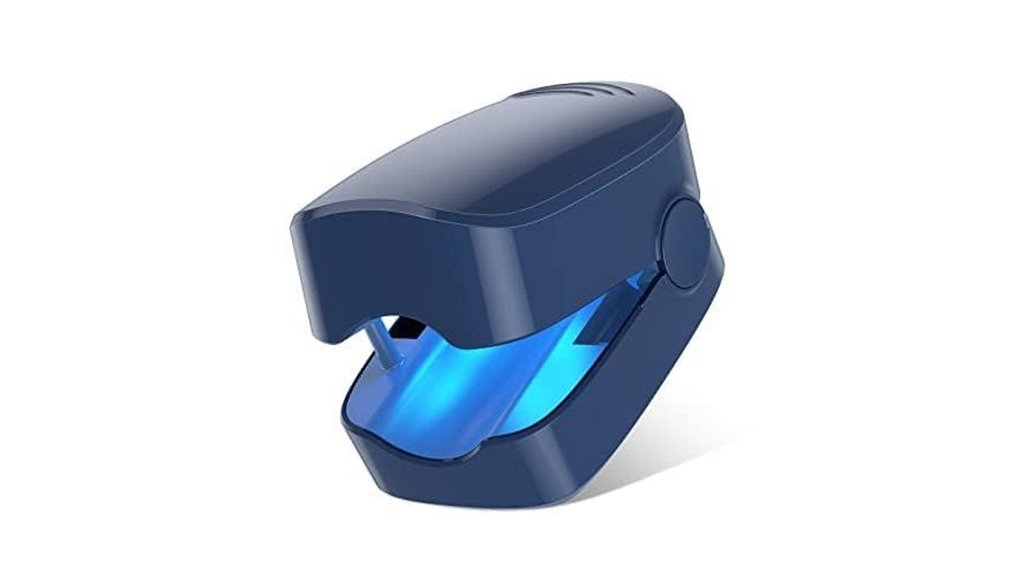
A standout feature for the Toenail Fungus Device for Home Use, Blue is its safe, at-home design that delivers targeted blue and infrared light without side effects, making it ideal for anyone seeking discreet, long-term nail health. This device repairs discolored, thickened nails at home, offering a highly effective, safe option with no side effects. Use it twice daily for seven minutes per session, and expect noticeable results in 2–3 months. It’s easy to use—just follow the instructions and let the device handle the treatment. In normal operation, three blue light beads pair with one infrared bead for therapy.
Best For: Individuals seeking a discreet, at-home blue and infrared light treatment to restore discolored, thickened nails without side effects.
Pros:
- Safe for home use with no reported side effects
- Easy to operate; routines fit into daily twice-daily 7-minute sessions
- Targets nail discoloration and thickening effectively with blue and infrared light
Cons:
- Results typically take 2–3 months of consistent use
- Requires regular use twice daily for several months to see significant improvement
- May not be suitable for all nail health conditions or severe infections without professional guidance
Nail Light for Toenail Fingernails, Home Use Blue
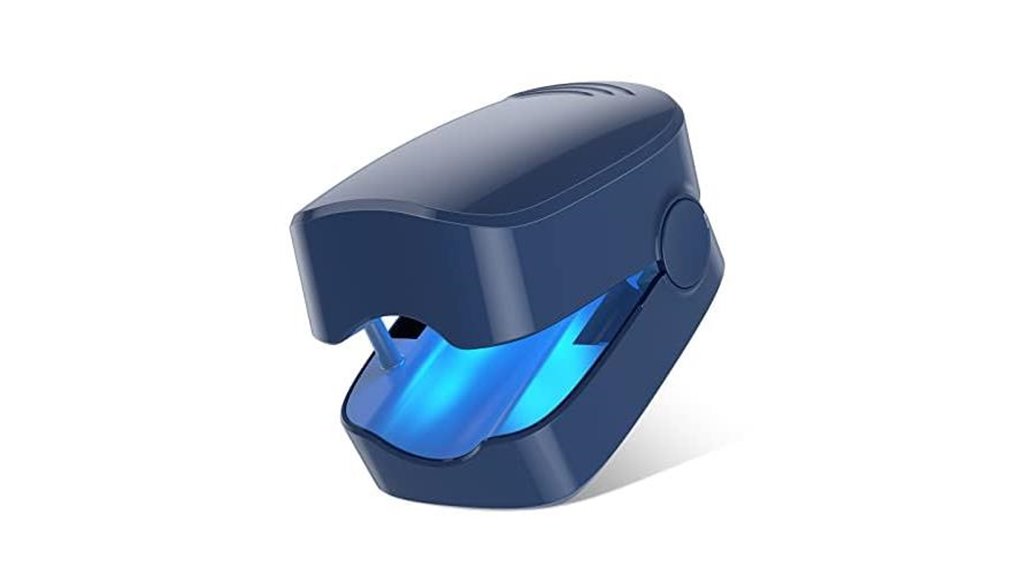
For quick, at-home nail care, this Nail Light for Toenail Fingernails, Home Use Blue stands out with its simple clip-on design and 7-minute sessions. Designed for easy use, it’s suitable for inexperienced users, letting you clip the device to a toe or finger and start treatment. Each session lasts 7 minutes, recommended twice daily for ongoing care. Daily use yields progress, and its portability fits home, office, or travel. After delivery, charge for 90 minutes; red light signals charging, blue indicates full power. Convenient, on-the-go care with clear indicators keeps sessions quick and practical for toes and fingers.
Best For: Individuals seeking a simple, portable, clip-on nail light for quick 7-minute at-home treatments, suitable for beginners.
Pros:
- Easy clip-on design for toes or fingers
- Short, 7-minute sessions that fit busy schedules
- Portable and convenient for home, office, or travel
Cons:
- Requires daily commitment (twice daily) for best results
- Battery charging time (90 minutes) before first use
- May be less suitable for professional-grade, long-term toenail care
Nail Fungus Laser LED Treatment Device (Toenail)
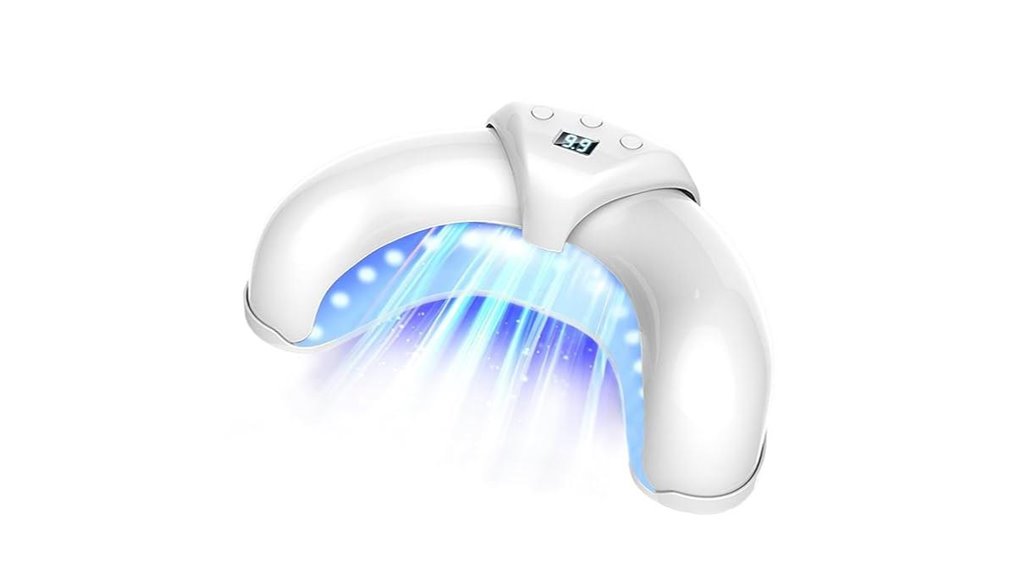
Nail Fungus Laser LED Treatment Device (Toenail) stands out for its dual-wavelength approach, combining 910 nm infrared and 407 nm blue light to heat the nail plate and disrupt fungal growth. You use it as a LED laser light device for toenail fungus and damaged nails, shining into the nail to raise temperature to 43-51°C for thermal damage that yields a significant effect. This is FSA or HSA eligible and supports restoring nail health. Follow a 7-minute session, twice daily for 3 months; expect gradual improvement, not instant results. Keep nails trimmed, sterilize clippers, and maintain hygiene for best outcomes. Continuous use matters.
Best For: People with toenail fungus seeking a dual-wavelength LED/laser option and willing to commit to a long, consistent treatment period for potential nail health restoration.
Pros:
- Dual-wavelength 910 nm infrared and 407 nm blue light designed to heat the nail and disrupt fungal growth.
- FSA/HSA eligible, potentially reducing out-of-pocket costs for eligible users.
- Emphasizes long-term treatment adherence with clear maintenance and hygiene guidance.
Cons:
- Requires 12-18 months for full nail growth and 3 months of regular use, with results that may be gradual.
- Instant or short-term improvements are unlikely; benefits depend on consistent use.
- Thermal-based approach may cause discomfort for sensitive individuals and relies on proper usage and hygiene to avoid infections.
Factors to Consider When Choosing Nail Fungus Laser Device at Home
When choosing a nail fungus laser device for home use, consider the light type and wavelengths to guarantee effective penetration and safety. Look at treatment duration per session and expected growth cycle timelines so you can plan realistic recovery. Also check home-use safety, battery life, and recharge options to keep the device ready whenever you need it.
Light Type And Wavelengths
Light type and wavelengths matter because they determine how effectively a home-use laser targets nail fungus. Most devices combine blue light around 470 nm with infrared light near 905–910 nm to attack the nail plate and underlying fungus. Some models use 407 nm blue light paired with 910 nm infrared to raise the nail plate temperature to about 43–51°C for a thermal effect. The infrared component is typically invisible and non-damaging to surrounding tissue, while the visible blue light provides the antifungal phototherapy effect. Your wavelength choices influence penetration depth: blue light treats surface nail plate issues, while infrared penetrates deeper toward the nail bed. Some units specify dual configurations (470/905 or 407/910) and fixed treatment times (7–10 minutes per session) for twice-daily use.
Treatment Duration Per Session
Choosing a treatment duration per session depends on your device and daily routine. Most home devices prescribe 7 to 10 minutes per session, twice daily, to fit typical schedules. Some models offer multiple preset durations (for example, 3, 5, or 10 minutes), so you can tailor sessions to your day. Look for auto-shutoff features, which ensure you don’t overrun a timer and maintain consistent use. Plan on about 2–3 months of steady treatment before you notice results, then understand full nail regrowth takes 6–12 months due to the nail cycle. Shorter, more frequent sessions can help embed a routine, while longer presets can streamline days when time is tight. Pick a device with flexible options aligned to your rhythm.
Growth Cycle Timelines
Growth cycles are slow, so align expectations with how nails regrow. Toenail replacement after infection clearance takes about 12–18 months for a full nail. You’ll likely see visible treatment results after 2–3 months of consistent use, but complete regrowth can span 6–12 months. Regular use—often twice daily—helps match the slow growth timeline and maximize gains. Don’t expect rapid changes; short-term improvements may be hard to notice due to the lengthy cycle and the time needed for new, healthy nail to replace damaged portions. These timelines apply to both toenails and fingernails, though fingernails grow faster, they still follow multi-month cycles. Choose a device with reliable, repeatable sessions to stay on track with these growth timelines.
Home Use Safety
When shopping for a home-use nail fungus laser, prioritize safety features and clear guidance on how to use the device. Ensure the device is safe for at-home use and won’t cause adverse reactions on normal nail tissue as stated by safety materials. Look for defined safety features and hygiene guidelines, such as sterilizing nail clippers and keeping nails trimmed during treatment. Verify the light wavelengths used (for example, 470 nm blue and 905–910 nm infrared) and confirm they are non-laser, non-damaging to surrounding tissue as claimed. Check the recommended regimen for duration per session and frequency (e.g., 7–10 minutes per session, twice daily) and the expected timeline for results (months). Confirm eligibility notes for users who can’t take oral medications or have heat sensitivity.
Device Recharge And Battery
Most devices offer cordless treatment, so you can move freely as you follow the regimen, but you’ll want to confirm a quick, reliable charge. Most models require an initial 90-minute charge before first use, shown by a red charging light and a blue full-charge light. When charged, you benefit from cordless operation during sessions, with battery-powered use emphasized in product notes. Some devices auto shut off after each 7–10 minute interval, helping you manage battery life you’ll rely on for twice-daily treatments. Battery life indicators signal readiness and remaining power, guiding your routine planning. Consistent charging logistics are essential to keep devices ready, so factor charging time, indicators, and auto-shutoff features into your purchase decision.
Nail Care Protocols
To get the best results from a home nail fungus laser device, start with solid nail care habits that support every treatment session. Trim nails regularly so they stay shorter than the toe tips before each treatment, improving light penetration and reducing interference. Sanitize nail clippers and tools before use to prevent infection, following device guidelines. Maintain consistent hygiene by washing hands or feet prior to sessions to optimize results. Follow a strict treatment cadence, such as 7–10 minutes per session, twice daily, for the full 2–3 month core period and up to 12–18 months for complete nail growth. Expect gradual improvements with long-term use; visible changes often appear after several months, and full regrowth may take a year or more.
Output Power And Penetration
What matters most for home use is how much power a device packs and how well it can deliver it to your nails. Most home nails devices combine blue light around 470 nm with infrared at 905–910 nm to reach the fungus beneath the nail plate. The infrared part heats tissue deeper, aiming for about 43–51°C to create a therapeutic thermal effect. Blue light targets surface or near-surface pathogens and can work with infrared to boost results. Total output power and the number of LEDs influence penetration depth and how evenly energy covers multiple nails. Look for clear session details—durations like 7–10 minutes and frequencies such as twice daily—to ensure consistent energy delivery for months of treatment.
Accessibility And Costs
Accessibility and costs matter just as much as power and delivery. You’ll want to factor in upfront charging times, since most home devices need about 90 minutes before first use. Session length matters too: 7 to 10 minutes per treatment, with a typical cadence of twice daily. Treatment timelines vary—expect 2–3 months for noticeable changes and 6–12 months for full nail regrowth. Consider device type: some are non-laser and gentler on surrounding tissue, while others pair lasers with LEDs at specific wavelengths like 470/905 nm or 910/407 nm. Availability of FSA/HSA eligibility is a potential perk for eligible models. Weigh accessibility against cost, ongoing consumables, and the likelihood of adherence to a long, multi-month plan.
Common Questions
Are Laser Devices Clinically Proven for Toenail Fungus at Home?
No, laser devices aren’t clinically proven to cure toenail fungus at home yet. You may see some improvements in appearance, but most reliable results come from professional treatment. If you’re considering DIY options, talk to a dermatologist first and follow product instructions carefully. You’ll likely need ongoing care and verification from a clinician. Avoid false claims about guaranteed cures, and keep expectations realistic while prioritizing safety and foot hygiene.
How Often Should I Use a Home Laser Device?
You should use a home laser device as directed by the product’s guidelines, typically several sessions per week for a few weeks, then a maintenance schedule. Don’t exceed recommended durations, and space sessions evenly to avoid overheating. Track your progress and note any irritation. If you don’t see improvement after the advised course, stop and consult a clinician. Consistency matters, but safety comes first.
Can These Devices Treat Fingernails Too?
Yes, these devices can treat fingernails too. They target fungal infections on nails generally, not just toes. You’ll apply the treatment to affected fingernails, following the product’s kit instructions for duration and frequency. Results vary, so be patient and consistent. Keep your nails clean and dry between sessions, and protect surrounding skin. If you don’t see improvement after several months, check with a clinician for alternatives or diagnostic checks.
Are There Risks or Side Effects at Home Use?
“Forewarned is forearmed.” You should know there are risks with home-use lasers, including skin irritation, burns, numbness, and uncertain nail improvement. Start with medical guidance, follow device instructions closely, and perform a patch test. Avoid treating broken skin or infected nails, and don’t overuse sessions. If you notice pain, redness, or worsening results, stop and consult a clinician. Use proper eye protection and keep out of children’s reach.
Do These Devices Require Professional Clearance or Prescription?
No, these devices don’t require professional clearance or prescription for home use. You can buy and operate them independently, but you should read instructions carefully, follow safety guidelines, and avoid treating infected or severely damaged nails without medical advice. If you’re pregnant, immunocompromised, or taking photosensitive meds, consult a clinician first. Monitor results, and stop if you notice worsening symptoms, skin irritation, or new pain. Schedule a professional check if home treatment isn’t helping after several weeks.