
Did you know up to 10% of adults deal with nail fungus at some point? If you’re seeking relief, you’ll want options that actually work and fit your routine. We’ll explore five salicylic-acid–based treatments for 2026, from fast-acting fungals to clear-drying gels, plus tips to choose the right one for your nails—and you’ll see why one choice could be your best path forward.
Key Points
- Salicylic acid-based keratolytics improve nail thickness and appearance by softening thickened nail material for better penetration.
- Formulations combine salicylic acid (often 10–25%) with moisturizers like propylene glycol and lactic acid to reduce dryness.
- Daily or twice-daily application with a tapering maintenance phase is common for gradual, long-term results.
- Safety notes emphasize start-low concentrations, watch for irritation, and special caution for diabetes or vascular conditions.
- Most products target nails and surrounding skin, with varying speeds—from a few weeks to months—for visible improvement.
Kerasal Nail Repair for Discolored/Damaged Nails
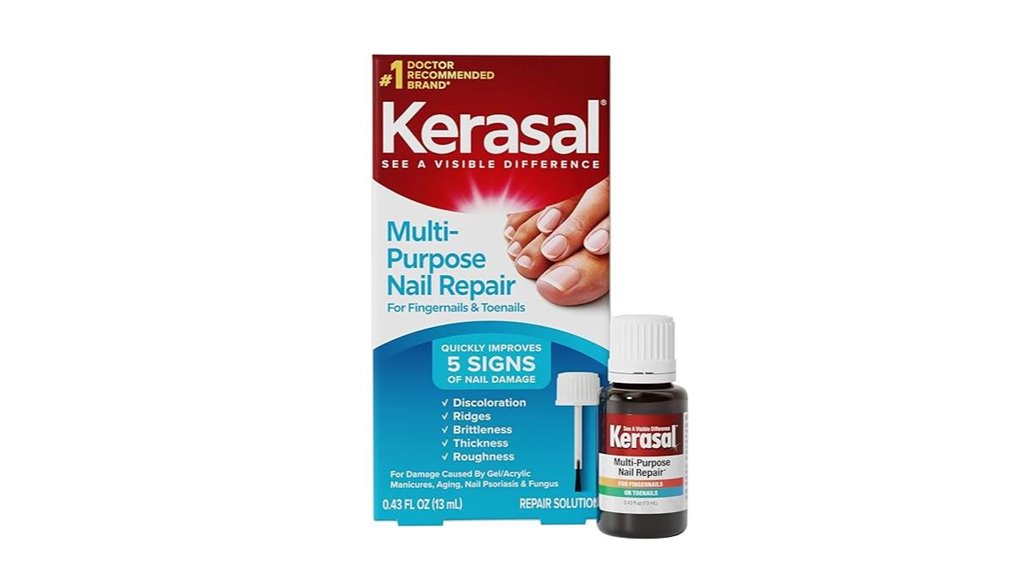
Kerasal Nail Repair stands out for anyone seeking a targeted solution to discolored or damaged nails, especially if you’re dealing with thickening or brittle nails from nail psoriasis, gel manicures, aging, or mild fungus. You apply a thin layer twice daily for the first week, then once daily to continue benefits. This solution, 0.43 fl oz, targets discoloration and thickness while hydrating and exfoliating brittle nails to improve appearance. Its keratolytic urea helps penetrate nail plates, aided by propylene glycol and lactic acid. It works across causes—psoriasis, gel-damage, aging, and mild fungus—repairing nails and reducing flaws.
Best For: Those seeking a targeted nail repair treatment for discolored or damaged nails, including thickened or brittle nails from psoriasis, gel manicures, aging, or mild fungal concerns.
Pros:
- Helps reduce discoloration and thickness while hydrating brittle nails
- Keratolytic urea penetrates nail plates to aid repair
- Easy twice-daily then once-daily application regime
Cons:
- Requires ongoing daily use to maintain benefits
- May take several weeks to notice substantial improvement
- Not a prescription antifungal; effectiveness may vary for fungal infections
Toenail Fungus Treatment with 25% Undecylenic Acid
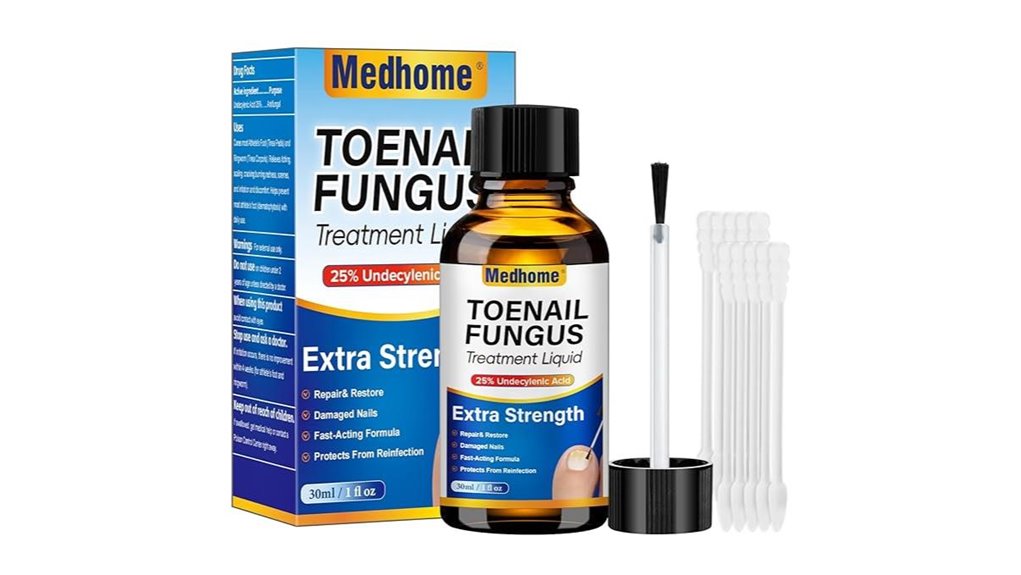
If you’re seeking a fast-acting solution for stubborn toenail fungus, this 25% undecylenic acid treatment stands out as a strong choice for thick, discolored nails and damaged tips. You’ll use a safe, extra-strength formula with 25% undecylenic acid that deeply penetrates to target discomfort and irritation, supporting a healthier nail appearance. It’s non-irritating, suitable for most skin types, and free from harsh chemicals. The treatment strengthens and restores nails, promising a 7-day renewal cycle and noticeable improvement in 1 to 3 weeks for fragile nails. Designed for fingernails and toenails, it comes in a portable 30ml bottle for travel or home care.
Best For: Those seeking a fast-acting, extra-strength toenail fungus treatment with 25% undecylenic acid to repair thick, discolored nails and damaged tips, suitable for both fingernails and toenails.
Pros:
- Deep penetration with 25% undecylenic acid targets discomfort and supports healthier nail appearance
- Non-irritating and safe for most skin types, free from harsh chemicals
- 7-day renewal cycle with noticeable improvement in 1 to 3 weeks for fragile nails
Cons:
- May require consistent use over 1–2 months for optimal thickness recovery
- 30ml bottle size may necessitate more frequent refills with larger nails or multiple nails affected
- Effectiveness can vary depending on severity and extent of damage
NONYX Fungal Nail Clarifying Gel for Fungus Nails
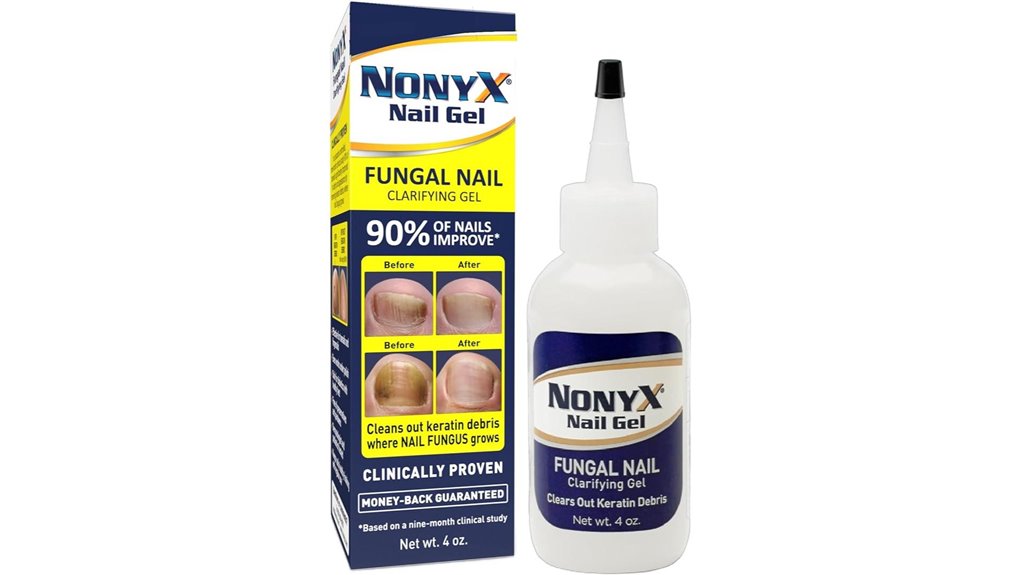
NONYX Fungal Nail Clarifying Gel is a standout choice if you want a clinician-supported solution that works under nail polish and targets multiple fungus-damaged nail signs. You’ll notice it’s clinically proven for discolored, thick, brittle, yellow, lifted nails, suitable for both toes and fingers, and recommended by podiatrists and dermatologists since 2004. It works under polish and promises best results with acrylic-based polishes, applied three times per month or when you change polish. In trials, 90% of nails improved in a double-blind study, with a sustainable effect. The gel is vegan, paraben-free, odor-free, dries clear, and easy to remove.
Best For: Individuals seeking a clinician-supported, polish-safe solution for fungus-damaged nails (toenails and fingernails) that dries clear, is vegan and paraben-free, and can be used under nail polish.
Pros:
- Clinically supported results with 90% improvement in nails in a double-blind, placebo-controlled study
- Works under nail polish and is compatible with acrylic-based polishes
- Odor-free, dries clear, easy to remove, vegan, and free of parabens/preservatives
Cons:
- Requires regular use (three times per month or when changing polish) for best results
- 4-ounce bottle may be larger than some competitors but may still be more expensive per ounce
- Effectiveness may vary based on severity of nail fungus and individual factors (e.g., diabetics with healthy feet)
Toenail Fungus Treatment with 25% Undecylenic Acid
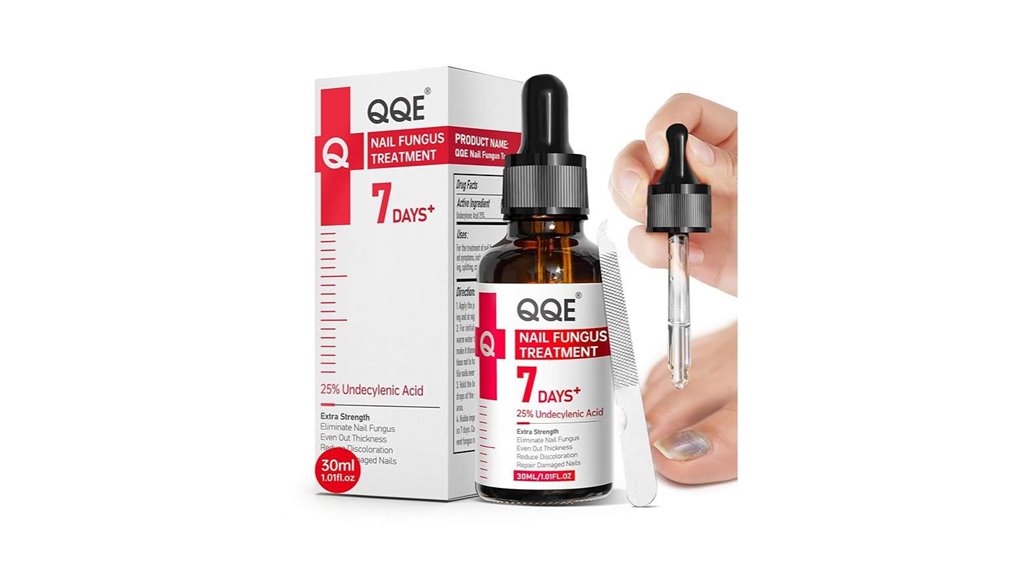
If you’re dealing with damaged nails and want a focused, at-home solution, the Toenail Fungus Treatment with 25% undecylenic acid is designed for you—combining a potent antifungal edge with a natural plant-based blend to support nail growth and strength. This anti-fungal treatment targets discolored, thick, or brittle nails, helping you feel confident wearing open-toe shoes. It uses extra-strength 25% undecylenic acid plus oregano and tea tree oils in a plant-based formula for nail growth and strength. A built-in dropper enables precise, mess-free application, ideal for hard-to-reach nails and cuticles. Consistent use shows visible improvements around 8 weeks.
Best For: Individuals with damaged, discolored, thick, or brittle toenails seeking an at-home antifungal treatment that supports nail growth and is easy to apply with a precise dropper.
Pros:
- Extra-strength 25% undecylenic acid combined with natural oregano and tea tree oils for antifungal action and support for nail health
- Plant-based formula designed to promote nail growth and strengthen nails
- Built-in dropper allows precise, mess-free application to hard-to-reach nails and cuticles
Cons:
- Results typically visible around 8 weeks, requiring consistent use
- May not address advanced fungal infections or nail damage that extensive in severity
- Some users may experience sensitivity to essential oils (oregano and tea tree) or dislike the scent
Dr. G’s Clear Nail Antifungal Treatment, 0.5 Fluid Ounce
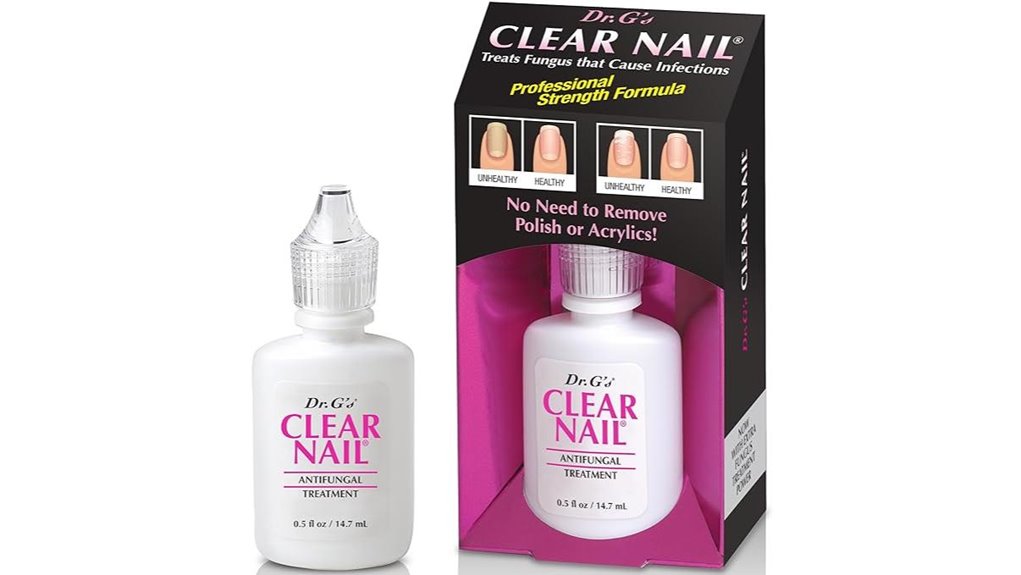
Dr. G’s Clear Nail Antifungal Treatment, 0.5 Fluid Ounce targets nails and feet with a professional-strength, 1% tolnaftate formula. This all-around nail treatment is clear and odorless, designed to kill bacteria, fungus, and viruses on contact while curing athletes foot and ringworm. You’ll notice fast-acting relief from itching, burning, cracking, and scaling, with gentle action on nails and surrounding skin to minimize irritation. Daily use helps prevent athletes foot, promoting healthier nails over time. This 0.5-ounce bottle provides a compact, easy-to-apply solution for foot symptoms, offering effective, targeted antifungal care.
Best For: Individuals seeking a professional-strength, odorless antifungal treatment for nails and feet that targets athletes foot and ringworm while minimizing irritation.
Pros:
- Clear, odorless formula that targets nails and surrounding skin
- Fast-acting relief from itching, burning, cracking, and scaling
- Daily use helps prevent athletes foot and promotes healthier nails over time
Cons:
- 1% tolnaftate may be less effective for some fungal infections compared to higher-strength options
- Dermatologist supervision may be advisable for severe nail or skin infections
- May require consistent, daily application for best results and time to see improvement
Factors to Consider When Choosing Salicylic Acid Nail Treatment
When choosing a salicylic acid nail treatment, assess your Nail Condition first to match the right concentration and potency. Consider the Penetration And Formula to ensure effective treatment without irritation, and review your Application Routine to fit your daily or weekly needs. Finally, weigh Safety And Sensitivity by checking labels for warnings and testing a small area before full use.
Nail Condition Assessment
Evaluating your nail condition helps determine how to use salicylic acid nails safely and effectively. Salicylic acid acts as a keratolytic, exfoliating thickened surfaces to improve treatment penetration. A higher concentration may yield faster results but raises the risk of irritation or chemical burns on surrounding skin, so match strength to your sensitivity and condition. Expect changes to appear over weeks to a few months, not days, and tailor your routine accordingly. Consider compatibility with other actives like urea or lactic acid, since interactions can influence both efficacy and tolerance. When you assess products, look for clear application guidance, duration, and cautions for sensitive or diabetic individuals. Prioritize brands that specify usage frequency and safety reminders to support steady, safe progress.
Concentration And Potency
Concentration and potency matter because higher salicylic acid levels can speed keratolysis, but they also raise the risk of irritation on surrounding skin. You’ll notice a wide range of formulations, from low-percent to higher-strength products designed to thin and debride thick nails. In practice, greater concentrations can accelerate results, yet they demand caution for sensitive cuticles and surrounding tissue. Manufacturers balance potency with moisturizers and humectants like propylene glycol and lactic acid to reduce dryness while aiding penetration. Most products target short-term, regular use—often daily or twice daily—followed by a maintenance schedule to sustain keratolysis and improved appearance. Effectiveness also hinges on delivery system—solution, gel, or patch—and how well the formulation penetrates the nail plate amid thickness or debris.
Penetration And Formula
Penetration efficiency hinges on the formula you choose. Salicylic acid acts as a keratolytic, softening and shedding thickened nail material to improve treatment penetration. Its hydrating and buffering effects support healthy nail plate hydration while aiding exfoliation of brittle, discolored nails. Penetration depends on the solvent system and co-formulated ingredients like urea, lactic acid, and propylene glycol that help transport salicylic acid through the nail plate. Higher concentrations around 10–25% may boost keratolysis but can raise the risk of thinning or irritation for sensitive nails or skin. Consistent, long-term use is often needed to see improvements in thick or deeply discolored nails due to nails’ slow growth rate. Choose a balanced formula that meets your sensitivity and needs.
Application Routine
When choosing a salicylic acid nail treatment, consider the recommended application schedule and how it fits your routine. Most routines involve applying a thin layer to the affected nails once or twice daily, following product directions. Some formulations use a per-week plan, like daily applications in week one, then tapering afterward. Consistent use over several weeks is usually necessary to see noticeable improvements in appearance and thickness. Some products specify use on nails and surrounding skin, and advise avoiding healthy tissue. Many routines recommend proper nail hygiene and, if possible, allowing the product to fully dry before covering with socks or shoes. Align the schedule with your daily habits to maximize results.
Safety And Sensitivity
Salicylic acid can improve nail appearance by exfoliating thickened material, but it can also cause dryness, irritation, or a burning sensation—especially if you have sensitive skin or apply it improperly. When choosing a treatment, consider how your skin responds to keratolytics and start with a low concentration. People with diabetes or peripheral vascular disease should seek medical guidance due to foot health risks. Higher concentrations or prolonged use raise the chance of nail bed irritation and chemical burns, so always follow the label directions. Be mindful of potential interactions: salicylic acid may alter absorption or efficacy when used with other topical therapies or antifungals. If irritation occurs, discontinue use and consult a professional to adjust your approach.
Results Timeline
So, what timeline should you expect when using a salicylic acid nail treatment? Look for a clearly stated timeframe, like improvements within 1 to 3 weeks or around 8 weeks, as a reliable guide. Check if the product notes a delta in thickening, discoloration reduction, or overall nail appearance within that period. Note distinctions between “initial improvements” (softer nails or surface exfoliation) and “full restoration” (thickness normalization) over longer use. Consider whether the maker specifies ongoing daily or twice-daily application for the initial phase and a transition to maintenance, with corresponding timelines. Be aware that some products report results after weeks to months, so review milestones (1–3 weeks, 4–8 weeks, 1–2 months) to gauge expected progress.
Common Questions
Are These Safe for Pregnant or Nursing Individuals?
Yes, they can be risky during pregnancy or breastfeeding. Salicylic acid is a salicylate, and high exposure isn’t recommended. Topical products with low concentrations are often considered safer, but you should consult your obstetrician or dermatologist before use. Avoid prolonged or frequent application, and don’t use on broken skin. If you notice irritation, stop and seek medical guidance. Consider safer nail care alternatives during pregnancy or nursing.
How Long Before Results Are Typically Seen?
Within 2 to 6 weeks, you’ll usually start noticing improvements in nail texture and skin peeling. When you apply it consistently, you’ll see faster results with daily or every-other-day use, depending on product strength. Don’t rush—fade happens gradually. If you skip days, expect a slower timeline. Like a vintage smartwatch, progress can feel slow but steady. Stay hydrated, avoid picking, and follow directions to maximize effectiveness and minimize irritation.
Can I Use These With Nail Polish or Gel Overlays?
Yes, you can use them with nail polish or gel overlays, but follow smart steps. Apply the salicylic acid treatment on clean, dry nails, wait the recommended absorbent time, then cap with a base coat before polishing or layering gel. Avoid applying polish over active treatment residue, and give each layer enough drying time. If you’re unsure, test on one nail first and monitor for irritation or thinning. Remove promptly if sensitivity occurs.
Do They Cure Fungal Infections Completely or Just Improve Appearance?
They don’t cure fungal infections completely; they often improve appearance and reduce growth, but you may need longer, medical treatment for a full cure. Think of it like gradual weathering of a storm, not a single thunderclap. You’ll likely see clearer nails and less spreading as you use them consistently, but be sure to follow directions, monitor progress, and consult a dermatologist if it doesn’t improve or if symptoms worsen. Avoid combining with aggressive polish removers.
Are Side Effects or Allergic Reactions Common With Use?
Yes, side effects and allergic reactions can occur, though they aren’t guaranteed for everyone. You might notice redness, itching, burning, or peeling at the application site, especially if you have sensitive skin. If you develop swelling, blistering, or severe irritation, stop use and seek medical advice. Do a patch test first, follow directions, and avoid broken skin. If you’re pregnant, nursing, or on other meds, consult a clinician before using.